
By Erin Isaac and Cady Berardi
In the weeks after a sudden February announcement that twelve provincial museums were slated to close in Nova Scotia, murmurs began to circulate that some of these sites might be rescued. The controversial decision to remove these rural sites from the Nova Scotia Museum followed significant budget cuts to several provincial departments including the Department of Communities, Culture, Tourism and Heritage, resulting in slashed programs and protests across the province.
The provincial government backpedaled cuts to disability and senior supports, as well as Indigenous and African Nova Scotian programs in the following weeks. In mid-April, some historical societies began to announce that their museum had been “saved.” While the decision to cut these sites from the Nova Scotia Museum was upheld, six of the twelve were offered alternative funding through the Community Museums Association Program (CMAP).
In a statement from the Queens County Historical Society made on Facebook, the directors indicated that they had “received a significant and encouraging offer from the Nova Scotia Museum to help secure the future of [Perkins House].” They announced that the museum’s future was saved through “an approved annual grant—funding that will play a vital role in ensuring its continued operation and preservation.” [1] Several historical societies, ours included, made similar statements.
The response to these announcements and reporting about this new funding stream implied that protests and outcry against the decision to close these museums had been heard. We let out a collective sigh of relief, despite feeling a little flustered by the short notice. Unfortunately, this sentiment was premature. These museums are open for the season, but they are not saved.
The lack of transparency that marked the decision to close these sites has followed into the recent offers to help save them.
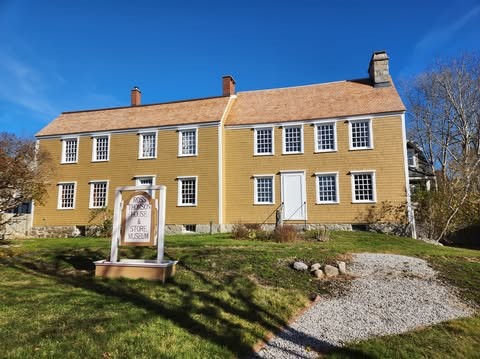
We have learned in recent weeks that the $50,000 operating grant was extended to the Barrington Woolen Mill, Cossit House, McCulloch House, North Hills Museum, and Ross-Thomson House and Store Museum. Although this grant represents a significant budget cut to the annual funding that the Shelburne Historical Society had received to operate the Ross-Thomson as part of the Nova Scotia Museum, we were quick to accept it. This funding reduction forced us to lay off one of our two seasonal staff members for the museum but we were determined to make it work.
We attempted to confirm details about the CMAP funding to better inform our decision and accepted it under the impression that this funding would be available annually. However, the communications we have received have been guarded and made no promises of permanence. And now we know why.
In a statement given in April, David Ritcey the Minister of Communities, Culture, Tourism and Heritage explained for the first time that the CMAP funding we have been promised is being considered “bridge funding” to help these museums transition to community sites.[2] Department staff have now been explicit that the province’s long term goal is to remove these sites from the provincial inventory. The $50,000 grant we were offered this year may be offered again, or it may be pulled just as quickly as it was scraped together. In the case that we are asked to take over the building in the future—which now appears likely—this grant will be wholly insufficient. The security Ross-Thomson had as a Nova Scotia Museum site has not been replaced and we will be on tenterhooks waiting to hear if the museum was saved only to be closed next year.
Despite the confusing doublespeak that has marked this entire process, the situation appears to remain largely the same as it was in February when we found out, because it had been announced to the public, that our site would be closed. Stop-gap funding that will allow us to operate the building this year will not secure the museum’s future, nor will it pave a smooth road towards a handoff of the building and its maintenance to our historical society.
The long-term future at Ross-Thomson is foggy as ever, but the short-term plans for this season are settled. The museum is open to the public alongside the rest of the complex from Tuesday-Saturday each week, 9-4. On June 20th, we’re bringing back the Garden Party in the Ross-Thomson yard that used to be a staple event for our historical society. And this fall, during the Giant Pumpkin Festival and Regatta on October 10, we’re launching our very own Tiny Turnip Festival (a festival within a festival) commemorating the giant turnip that was shown off at Merchant’s Coffee House in Shelburne in 1786.
We appreciate the continued support we have received in the aftermath of the announcement that Ross-Thomson was to be closed. We are thrilled that our community and visitors to our town will have the opportunity to visit the museum this year. But we remain concerned that the provincial government continues to signal its intent to shunt its commitment to this building to a small, volunteer-led association, as if the expense is better borne by local shoulders while our tax dollars are diverted to Halifax.
Cady Berardi is the Curator of the Shelburne County Museum.
Erin Isaac is a PhD candidate at Western University with special interests in lived experience in early Shelburne. Erin relocated to Shelburne in 2023 to participate in the Ross-Thomson Renewal project.
[1] Statement of the Queens County Historical Society, Facebook, 17 April 2026, https://www.facebook.com/permalink.php?story_fbid=pfbid02MG66v3JKYJ8iAKdNGt8bmEXemFuzj46iCyu1Q32UwzxfgXDgVjhxeJ8jKKhLRX99l&id=100057061076326
[2] Michael Gorman, “Money saved from closing 12 museums will help half of them remain open,” CBC, 23 April 2026, https://www.cbc.ca/news/canada/nova-scotia/dave-ritcey-musuems-9.7175269
This work is licensed under a Creative Commons Attribution-NoDerivatives 4.0 International License. Blog posts published before October 28, 2018 are licensed with a Creative Commons Attribution-NonCommercial-ShareAlike 2.5 Canada License.