By Amelia Palacios, Molly Blake, Jenny McBurney and Kirsten Delegard; co-founders of Save Our Signs
On the corner of Sixth and Market streets in Philadelphia sits a contested site at the heart of the origin story Americans tell one another. Nearly two decades ago, this particular National Park Service (NPS) site was the focal point for heated debates about the purpose of history and national identity. Today, these debates have resurfaced with dire consequences.
This corner in Philadelphia is home to the site of the signing of the Declaration of Independence, the Liberty Bell, and the buried foundation of the first presidential mansion. Together, these sites make up Independence National Historical Park.
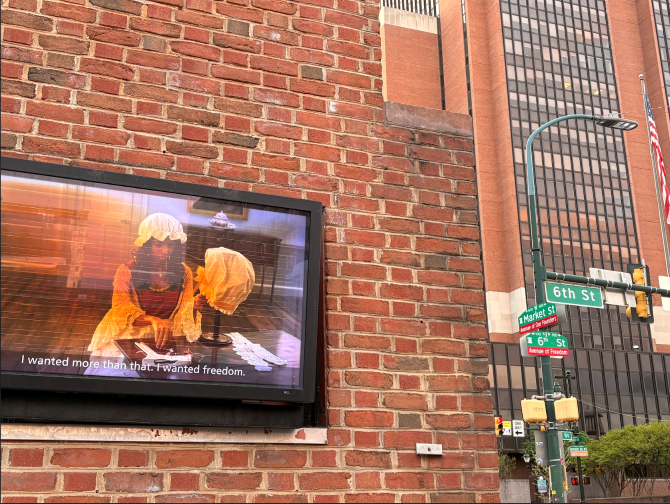
In 2002, an activist group called the Avenging the Ancestors Coalition (ATAC) organized for nearly a decade to demand that Independence NHP tell the full story of the nine individuals George Washington enslaved at our nation’s first “White House”. As a result of this years’ long advocacy and public engagement, in 2010, the National Park Service opened an exhibit called The President’s House: Freedom and Slavery and the Making of a New Nation.
The President’s House Site is the first federally owned property to feature a slave memorial. It was hailed as a hard fought victory for activists seeking public acknowledgement of the history of slavery and a way to honor the people held in bondage.
The exhibit invited visitors to grapple with the prevalence and violence of slavery and a central paradox: the role slavery played in a nation founded on the ideals of liberty and freedom. Each wall included interpretive panels that told of the intertwined lives of the 9 individuals enslaved at that site by the nation’s first president.
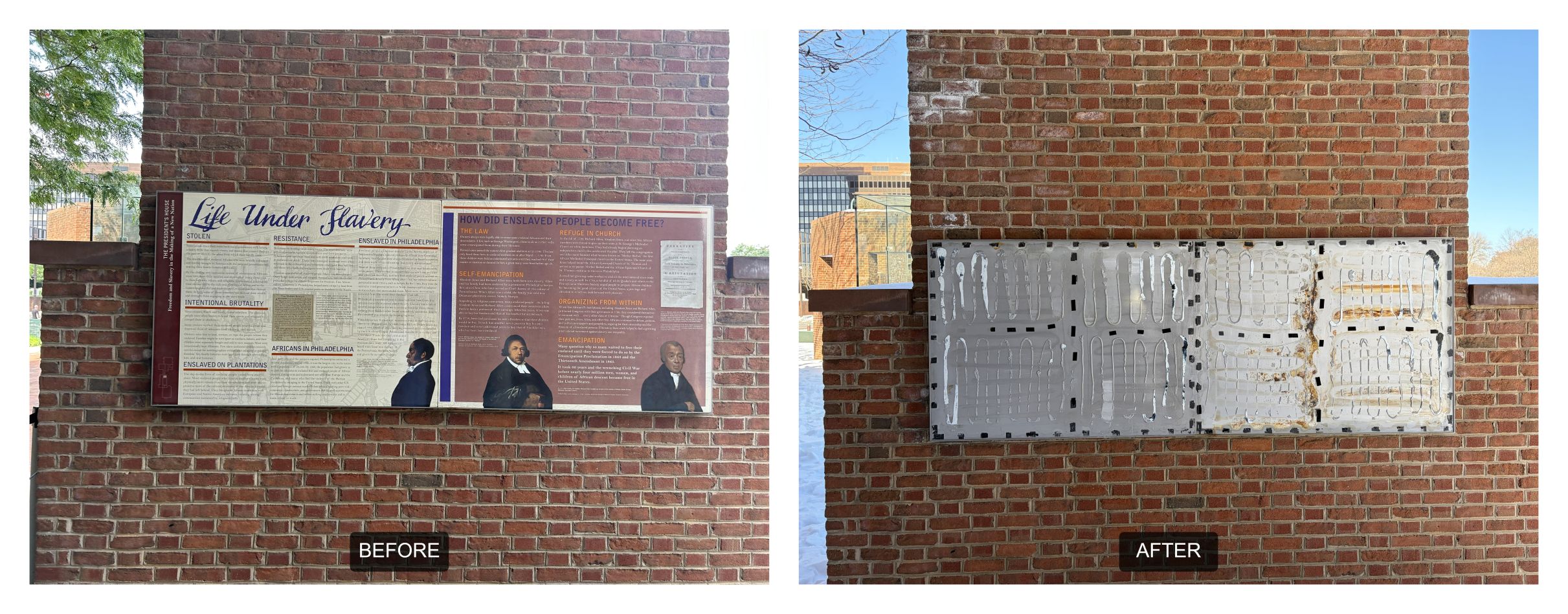
Today, visitors to the President’s House will instead find ghostly outlines of exhibit panels and empty mounting hardware on brick walls. These spectral traces sit alongside screens playing historical re-enactments with no context. Chain-linked fences and caution tape barricade portions of the site, with signs stating: “Preservation work in process.”
This National Park Service site is one among 12 that have fallen victim to the Trump administration’s effort to restore “truth and sanity” to American history.
“Restoring Truth and Sanity to American History” is the title of an effort announced on March 27th 2025 via Executive Order 14253. It instructs the Secretary of the Interior, who oversees the National Park Service, to “ensure that all public monuments, memorials, statues, markers, or similar properties within the Department of the Interior’s jurisdiction do not contain descriptions, depictions, or other content that inappropriately disparage Americans past or living.”
This order, and the subsequent Secretarial Order 3431 of the same name, sent park employees and the general public on a hunt through 433 NPS sites for educational materials that “inappropriately disparage” Americans. This quest to root out “corrosive ideology” has flagged films, brochures, and exhibit texts, signs and wayfinders for review. Some, like the signs at the President’s House Site, have been outright removed or altered.
The National Park Service is charged with not only stewarding and protecting our country’s most historically, culturally, and scientifically important or vulnerable sites, but also with providing accurate interpretation of these sites to the public. To fulfill this mandate, historians and sign designers meticulously research and craft interpretive materials for the Park Service. These materials are place-based repositories of knowledge, used to educate people of all ages about history and the natural world found in our parks. With over 300 million visitors a year, NPS is the nation’s largest outdoor classroom. The National Park Service, and the materials housed there, make up the people’s school.
The Trump administration is on a campaign of knowledge destruction. By targeting NPS and its interpretive materials, this administration is gutting a critical government agency devoted to stewarding our national memory.
Americans have launched multi-faceted and decentralized efforts to combat this censorship. While some organizations have filed lawsuits and lobbied Congress, we have pulled on the resources of the library world to tap into the deep public affection for the National Parks and preserve these targeted materials. We brought together librarians and public historians with data and geospatial experts to create Save Our Signs (SOS), which invites members of the public to visit NPS sites and take photos of interpretive signs.
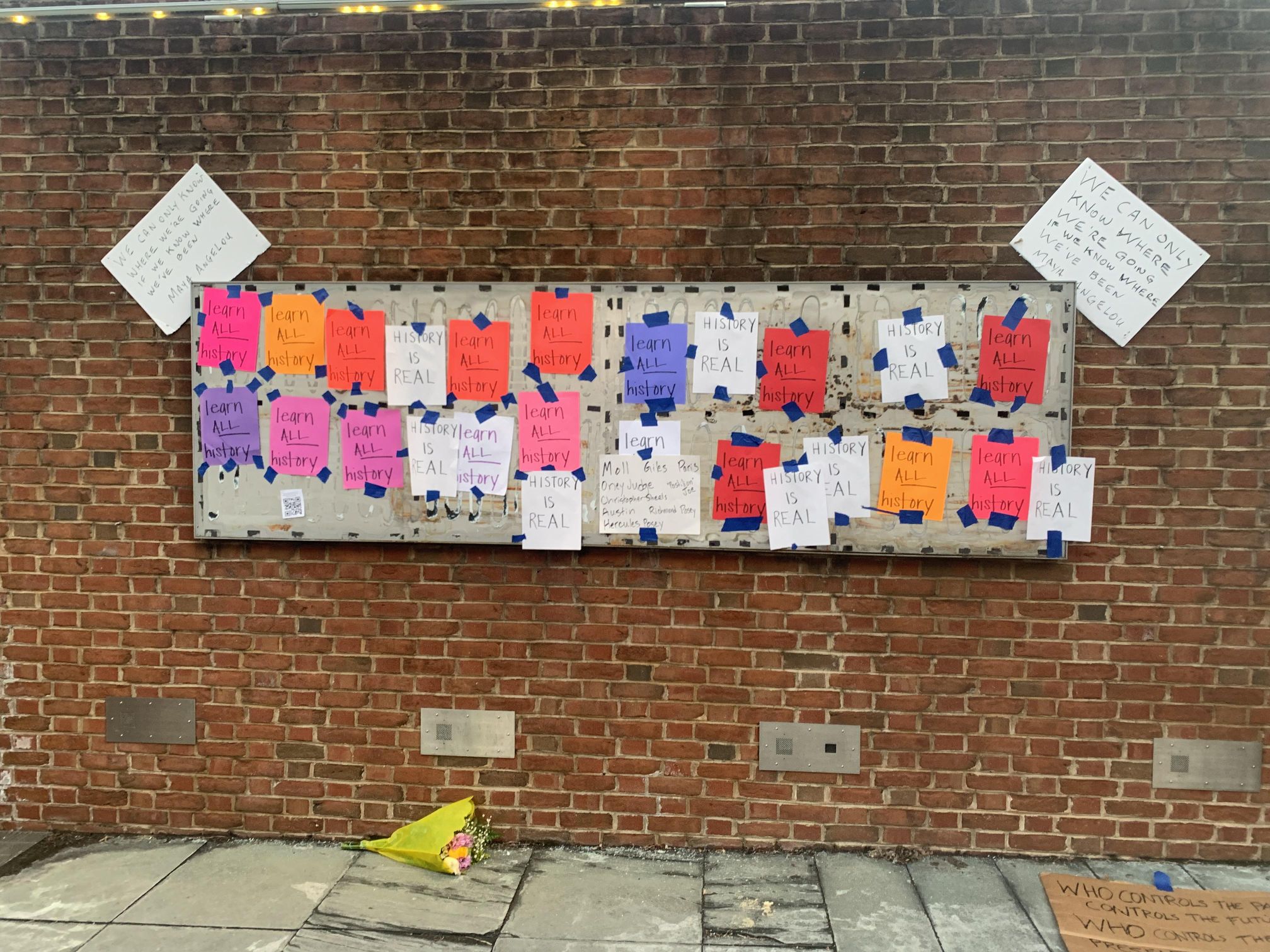
Since we launched our project in July 2025, we have received over 15,000 photos from 422 national park sites. We have used these submissions to create a people’s archive which contains photos of regular NPS signs, alongside documentation of censorship (such as photos of blank spaces where signs used to be), and of creative resistance (such as photos of handwritten signs community members posted at the President’s House site saying “History is real” and “Learn ALL history.”)
We also maintain a list of signs removed or altered to track what materials have actually been censored. This SOS Removal Tracker has been used by journalists, lawyers, and community advocates as the definitive source for a comprehensive list of censored signs in the National Parks.
In March 2026, an internal Department of Interior dataset listing NPS materials flagged for removal was leaked to the public. To help people understand this data, we created a Storymap. We hope that people can use this visualization along with our SOS Archive to identify still-unphotographed signs especially at risk for removal.
This project builds on a lineage of place-based public history and crowdsourcing projects that bring the public into the research process. More specifically, SOS is rooted in the methodologies of Mapping Prejudice, a crowdsourced research project based at the University of Minnesota Libraries that mobilizes community members to identify and map racial covenants, which were clauses inserted into property records during the early to mid twentieth century that barred people who were not white from owning or occupying the land. Mapping Prejudice works with community members to unearth the willfully hidden history of how structural racism shaped the built environment in the United States.
Such previously obscured histories, like the practice of racial covenants or the lives of the nine individuals enslaved by George Washington, are being categorically labeled as “disparaging” or “corrosive” by an administration that would prefer to keep some facts hidden from public view. Save Our Signs is trying to keep these unearthed histories visible–preventing them from being buried again.
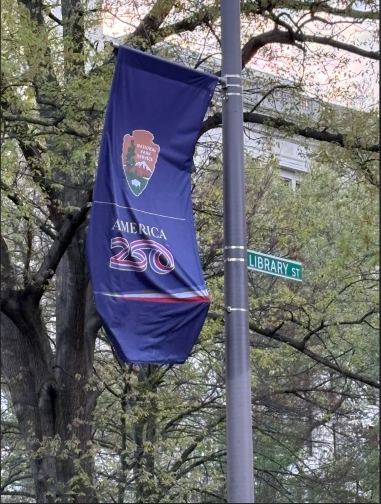
As the United States begins to celebrate the 250th anniversary of the Declaration of Independence, the Trump administration has sought to turn back the clock on such historical recovery work. In fact, Independence National Historic Park is called out specifically in both the Executive Order and Secretarial Order for “renovations” in time for the America250 celebrations.
In April, the Philadelphia Inquirer reported on such proposed “renovations” when NPS published to the President’s House Site website the new proposed interpretive signs intended to replace the original signs at this site.
Compared to the original exhibits, which mention the nine enslaved individuals in almost every panel, the proposed panels rarely mention them. The Trump administration’s proposed replacement panels further minimize the horrors of slavery, omitting much of the information from the original exhibit.
This blatant omission of factual history is disturbing to witness. Perhaps most disturbing, was the subtlety of the content changes. So when two of our team members had the opportunity to attend the Organization of American Historians’ conference in Philadelphia in mid April, we created a visualization tool to help people see the gravity of these proposed changes. We printed pamphlets to advertise the side-by-side visualization tool and handed them out to people we met while we visited the President’s House site.
We spoke to community members who kept vigil at the site. One concerned citizen shared how he has been going to the President’s House every weekend, posting blank paper on the walls where the interpretive panels once hung. While we watched, he affixed markers to the walls with painters tape, inviting park visitors to share their thoughts.
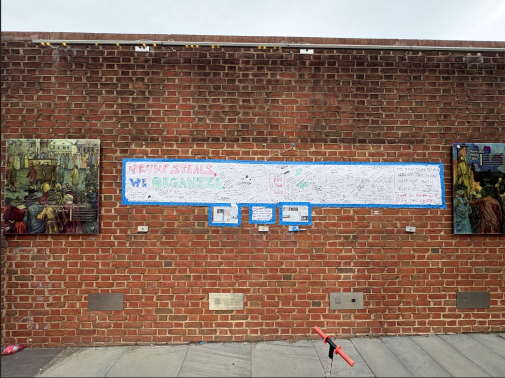
He noted that the rangers mostly turn a blind eye towards the community responses, only removing the signs after a few days. But he and other community members have been wondering if that attitude will change as the 250th anniversary nears.
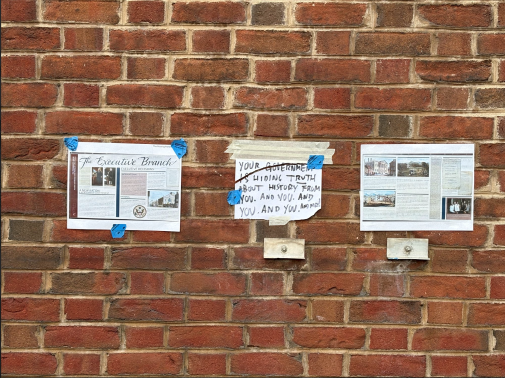
A court ruling at the end of last week directed the federal government to re-install all censored signs before the 250th celebrations this July 4th, providing what we hope to be a major victory in the fight against this censorship. Yet the Department of Interior has already filed an appeal, and we have not seen reports of the original signs reinstalled at the President’s House Site.
As this fight continues, the Save Our Signs team hopes that these public conversations about historiography and what is worthy of remembrance are only just beginning.
What we choose to remember shapes who we are and who we believe we can be–individually and as a nation. With each photo submitted to the people’s archive of National Park signs, and with each printed out panel taped to blank walls, Americans are asserting what national narratives they want to memorialize and enter into the national consciousness. And they want accurate history that is rich, nuanced and full of the failures, the glories and everything in between.
Save our signs is a project based out of the University of Minnesota Library. You can learn more about it here.
This work is licensed under a Creative Commons Attribution-NoDerivatives 4.0 International License. Blog posts published before October 28, 2018 are licensed with a Creative Commons Attribution-NonCommercial-ShareAlike 2.5 Canada License.