
Daniel Sims
This post is part of the Indian Act 150 series
In May 2024, I attended a meeting of Parks Canada’s Indigenous Cultural Heritage Advisory Council in Sydney, British Columbia. One of our agenda items was the federal government’s commemoration of upcoming historical events, including the passage of the Indian Act in 1876. The hope was that we would tell the federal government how to commemorate these events in an Indigenous way or at least in a manner that reflected the value of Indigenous peoples and Indigenous values. To say the council was not particularly excited was an understatement. Truth be told, the individual who presented the item to the council was equally unenthused. Yet it highlighted something the council kept running into during the entirety of its existence. How are celebration and commemoration related, and what do you do when things like the Indian Act hit a milestone in their history?
The Indian Act has impacted Indigenous peoples in Canada for one hundred and fifty years. While it technically does not apply to Inuit[1] or Métis, the fact that it applies to the largest Indigenous group in Canada—First Nations—and as a result informs federal and provincial laws and policies regarding them, means that it often has a spillover effect on the other two groups. Nowhere is this better seen than in the Indian Residential School system. Although it included First Nations, Métis, and Inuit children, it tended to focus on First Nations children, and its policy of mandatory attendance was heavily informed by the Indian Act.[2]
This sort of nuance is fundamental to moving beyond basic understandings of the Act. As the late Murray Sinclair famously stated, “Education got us into this mess, and education will get us out of it.” It is equally important, however, that this education is correct. If the goal is to change the hearts and minds of those with negative views of Indigenous peoples, then any evidence of exaggeration or falsehood can, through the process of confirmation bias, prevent that from happening. A good example is the attempt by Indian residential school deniers to exonerate the entire system by making claims that there are not two hundred and fifteen unmarked graves at the former site of the Kamloops Indian Residential School.[3] The logic appears to be that if “they” were wrong/lied about x, then “they” must have been wrong/lied about y too. It is not a deductive argument, and as inductive arguments go—unless you assume “they” have ulterior motives and/or are trying to deceive you—there is no clear causal relationship between x and y. Still, Indian residential school deniers make that connection because they know that anyone who is already skeptical about the history of Indian residential schools will be predisposed to accept arguments that confirm their biases. As a result, it is important to ensure that when we talk about the Indian Act, we do not exaggerate or make allegations that can be easily disproven by anyone with time and an internet connection.
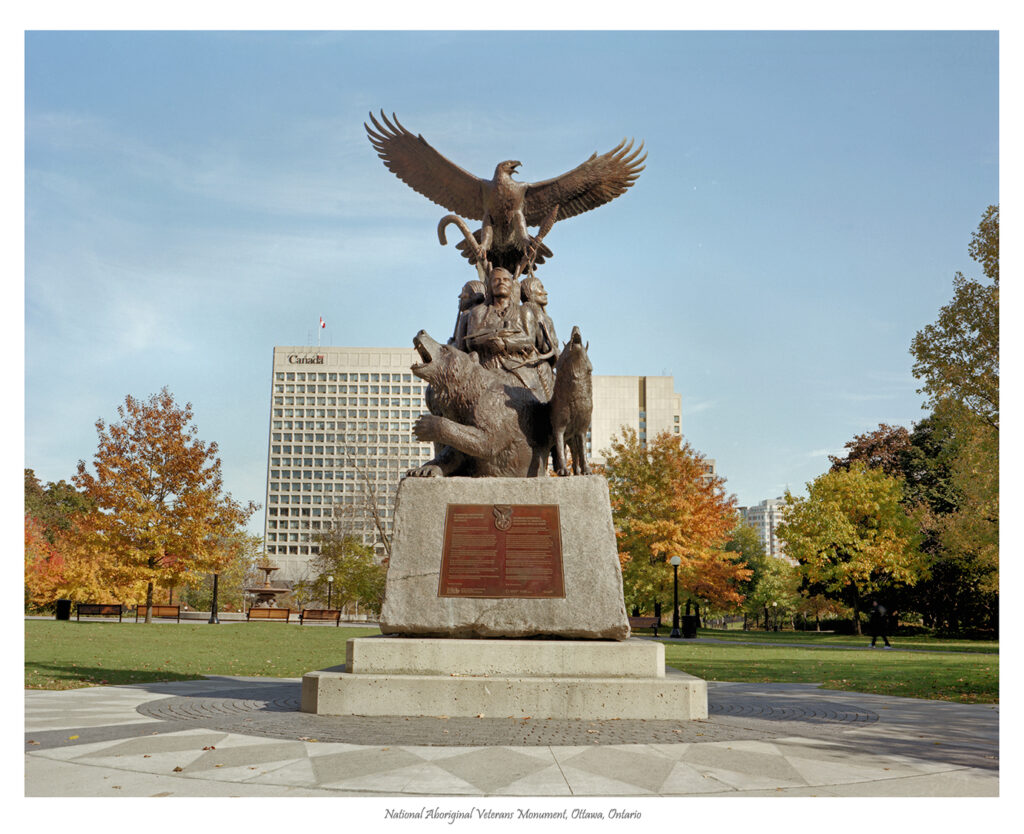
There are some exaggerations and misinformation about the Indian Act that persist to the present day. In 2019, I pointed out in my review of Bob Joseph’s 21 Things You May Not Know About the Indian Act for the Ormsby Review that it was incorrect to claim that status Indians who joined the military during the Second World War—or the First World War, for that matter—automatically lost their status.[4] I am not saying no status Indians lost their status after serving Canada in the world wars, but rather it was not automatic, and claims to the contrary are extremely easy to disprove.
There are numerous status Indian veterans who served and never lost their status. Indeed, one of the chiefs of the McLeod Lake Indian Band, Andrew Solonas Sr., served for four and a half years in the Second World War, never lost his status, and was later elected by his nation. Second, as Veterans Affairs Canada points out, many Indigenous veterans did not receive benefits after either world war because of their legal status under the Indian Act.[5] In other words, because they were status Indians after serving. Even here, the exact reason was insidious, as technically they were eligible for many of these benefits, but they had to apply to Indian Affairs for them, which often had a reason to deny an application and/or reduce what was received based on the rationale that, as status Indians, they already received benefits from the Crown.[6] Indeed, this situation has been stated as one of the reasons why the Michel band enfranchised en masse – the only First Nation to do so. One band member, who served in the Second World War, wanted access to veterans’ benefits like other Canadians, and when he tried to give up his Indian status to accomplish this goal, he was told by the federal government that he had to get the entire nation to give up their status too.[7] And finally, as Joseph notes on his website—after and contrary to what he said in his book—only some people lost their Indian status because they were away from their reserve for too long without permission from Indian Affairs and/or were told by Indian Affairs that they needed to give up their Indian status to serve.[8]
And that brings us back to the Indian Act. If you look at the versions that existed during the world wars, you will not find anything in them that stated that status Indians who served in the armed forces would lose their Indian status. Perhaps far more insidiously, the reasons why people lost or gave up their Indian status did not apply to everyone and were often quite literally personal.
Another exaggeration has to do with the ability of Indigenous peoples to hire lawyers. It is commonly stated that Indigenous peoples or status Indians lost the ability to hire lawyers in 1927 when the federal government enacted one of its many amendments to the Indian Act. As a practical matter, this statement is true, but it is far more complicated than that. The amendment to the Indian Act never actually stated that status Indians could not hire lawyers. Rather, the Indian Act was changed to make it a crime for anyone—regardless of race or ethnicity—to request or receive money from a status Indian to pursue a claim in court for a band or tribe without the written permission of the Superintendent General of Indian Affairs.[9] So strictly speaking, people could still get or ask for money from a status Indian to pursue claims, they just had to get permission from Indian Affairs first.
To be clear, this technicality was in many ways a cruel farce. One reason the federal government passed the 1927 amendment was that more and more First Nations were pursuing claims against the federal and provincial governments, especially in British Columbia, where the Aboriginal lands question was reaching a false climax—the so-called Great Settlement. But the technicality existed nonetheless.[10] And while it was removed from the Indian Act in 1951, a similar concept known as Crown immunity resulted in the dismissal of the Calder case in 1973, when the Nisga’a failed to obtain the Attorney General of BC’s permission to sue the Province of British Columbia. This outcome is ironic given that the Calder case, in recognizing Aboriginal title was not created by the Crown, is often seen as a victory for Indigenous peoples, and the reason why the modern comprehensive treaty process started in Canada.
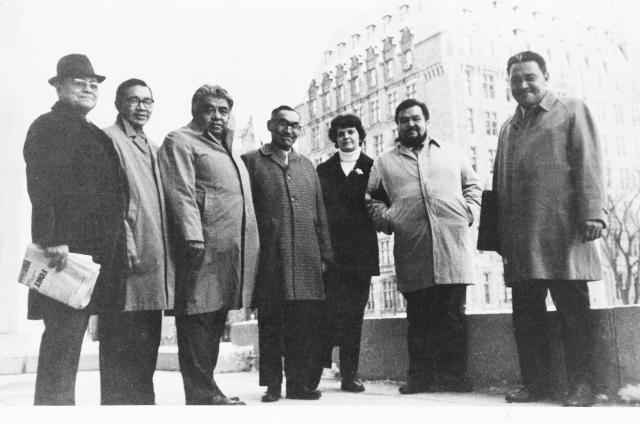
Moreover, it is often overlooked that Indian Affairs took a multistep approach to banning the hiring of lawyers. Before 1927, a 1910 amendment to the Indian Act forbade a band or band member from entering into a contract or agreement using band or federal government funds without the written permission of the Superintendent General of Indian Affairs.[11] This amendment did not explicitly state the agreement or contract included hiring a lawyer, but it coincided with new sections in the Indian Act regarding the sale and surrender of reserve land by Indian Affairs, as well as a number of declarations and petitions in British Columbia demanding that Aboriginal title be dealt with. And even though historical geographer Cole Harris points out that there are clear indications that the federal government under Wilfred Laurier wanted to make a claim against the province to force the issue, Laurier’s defeat in 1911 precluded the claim. The end result was that status Indians were hindered in their ability to hire lawyers at a time when being able to do so might have helped them.[12] It did not stop land claims in the province, however, and in this sense, while the first amendment in 1910 might have stemmed from a desire to help Indigenous peoples, the second amendment in 1927 was clearly meant to silence them.[13]
When I teach my senior-level Indigenous history course, I always bring up the obsolete Bohr model of the atom in which the nucleus is at the center, and electrons orbit in circular energy levels. Although physicists have recognized the Bohr model as flawed for about a century, it is still used today as a teaching tool because it is easy to understand and helps students grasp the basics of atomic structure before being introduced to more complex concepts. In a certain sense, the intricacies of the Indian Act—including Indigenous veterans losing their Indian status and Indigenous peoples not being able to hire lawyers—could be seen in the same light. Today, it is important for us to move beyond these simplifications to discuss the nuance of the Indian Act. The fact that some Indigenous veterans gave up or lost their Indian status because a government official enforced a section of the Indian Act in bad faith is arguably far worse than everyone losing their Indian status. The same is true of hiring a lawyer. And make no mistake, these technicalities have had real-world consequences. And more recently, it has provided fuel to groups like Indian residential school deniers, who attempt to use minor mistakes to disprove larger things.
Dr. Daniel Sims is a member of the Tsay Keh Dene Nation. Currently, he works as an associate professor in the Department of First Nations Studies and an adjunct professor in the School of Education at the University of Northern British Columbia. His current research examines failed economic developments and concept of wilderness in the Finlay-Parsnip watershed.
This series was produced within the project Historicizing Our Times: Histories of Migration and Climate in the Digital Space, which is supported in part by funding from the Social Sciences and Humanities Research Council.
[1] Section 4(1) explicitly states that the Indian Act does not apply to Inuit. A version of this section has been part of the act since the 1951 amendment.
[2] Truth and Reconciliation Commission of Canada, What We Learned: Principles of Truth and Reconciliation (Truth and Reconciliation Commission of Canada, 2015), 5, 6, 29, 32, 33, 36-38, 39, 84, 87, 89, passim.
[3] Tom Flanagan, “No Evidence of ‘Mass Graves’ or ‘Genocide’ in Residential Schools,” Fraser Institute, 12 February 2024, https://www.fraserinstitute.org/commentary/no-evidence-of-mass-graves-or-genocide-in-residential-schools
[4] Daniel Sims, “#514 Consider the Indian Act,” Ormsby Review, 2 April 2019, https://thebcreview.ca/2019/04/02/514-consider-the-indian-act/
[5] Veterans Affairs Canada, “Indigenous Veterans,” Remembrance – People and Stories, 23 April 2026, https://www.veterans.gc.ca/en/remembrance/people-and-stories/indigenous-veterans
[6] Magdalena Paluszkiewicz-Misiaczek, “‘They Should Vanish Into Thin Air… and Give No Trouble:’ Canadian Aboriginal Veterans of World Wars,” Journal of Military and Strategic Studies 19, no. 2 (2018): 119-123, 125-128, passim.
[7] Colleen Underwood, “Why My Grandfather Dissolved the Michel First Nation and Renounced His Indian Status,” CBC – The Doc Project, 29 May 2018, https://www.cbc.ca/radio/docproject/disbanded-why-my-grandfather-dissolved-our-reserve-1.4643764/why-my-grandfather-dissolved-the-michel-first-nation-and-renounced-his-indian-status-1.4643782
[8] Indigenous Corporate Training Inc., “Indigenous Veterans: Equals on the Battlefields, but Not at Home,” Indigenous Corporate Training Inc., 9 November 2021, https://www.ictinc.ca/blog/indigenous-veterans
[9] Indian Act, chap. 32, 1927, s.149a.
[10] I do not believe anyone calls it the Great Settlement anymore, but anthropologist Wilson Duff did. See Wilson Duff, The Indian History of British Columbia, vol. 1, The Impact of the White Man (Ministry of Provincial Secretary and Government Services, 1980), 69-70; Cole Harris, Making Native Space: Colonialism, Resistance, and Reserves in British Columbia (UBC Press, 2002), 260.
[11] Indian Act, chap. 28, 1910, s.87; Indian Act, chap. 14, 1911.
[12] Harris,225-228, 378n55.
[13] Paul Tennant, Aboriginal Peoples and Politics: The Indian Land Question in British Columbia, 1849-1989 (UBC Press, 1990), 111-113, passim.
This work is licensed under a Creative Commons Attribution-NoDerivatives 4.0 International License. Blog posts published before October 28, 2018 are licensed with a Creative Commons Attribution-NonCommercial-ShareAlike 2.5 Canada License.