Hannah Roth Cooley Over roughly the last decade, settler Canadians and Americans have started to take note of Indigenous activist initiatives, thanks in large part to social media. Beginning with the explosion of #IdleNoMore in 2012, social media has become an important tool for circulating political messages and sharing cultural knowledge within and beyond Indigenous communities. Certainly, Indigenous Peoples advocating… Read more »
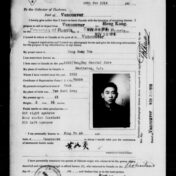
June Chow This post is a sequel to The right to remember the past: Opening Chinese immigration records in Canada’s national archives published on March 27, 2025. It is adapted from a presentation made on June 11, 2025 at the Association of Canadian Archivists conference held at Carleton University (Ottawa, Ontario) to an audience that included Librarian and Archivist of Canada, Leslie… Read more »
By Christine Cooling When Canadians tuned into their first radio broadcasts in the 1920s, much of what they listened to wasn’t Canadian. American stations with stronger signals and flashier programming initially dominated the airwaves. The radio audience developed over time as the medium entered the domestic space, but Canadian listeners were part of a transnational media environment from the very… Read more »
Laura Ishiguro, Nicole Yakashiro and Ayaka Yoshimizu What can one racialized migrant woman’s life teach us about resistance and community-building in today’s context of rising conservatism, nationalism, and securitization? The open educational resource (OER) we’ve created centres on the life of Kiyo Tanaka-Goto, a Japanese woman who lived much of her adult life in Vancouver’s Downtown Eastside (DTES), especially during the interwar… Read more »
By Andrew Nurse I like reading old newspapers and I know that is not out of place for an historian. In one way or another, media are history’s life blood, even if we don’t all make use of them in the same way. The range of media at which historians look is broad. It includes posters and recordings, maps and… Read more »
John Price This is the second post in a two-part series based on a recently published article in the International Journal, “Resisting Palestine’s Partition: Elizabeth MacCallum, the Arab World and UN Resolution 181(II).”Part One is available here. The balance of evidence does suggest that Canada contributed more than any other country, including the USA, to the establishment of Israel. As… Read more »
John Price This is the first post in a two-part series based on a recently published article in the International Journal, “Resisting Palestine’s Partition: Elizabeth MacCallum, the Arab World and UN Resolution 181(II).” The second post in the series is available here. “I am a Zionist,” declared Justin Trudeau just before stepping down as prime minister. “No one in Canada,” he stated,… Read more »
Francesco Coirazza “Multiculturalism finally no longer applies to Quebec! […] It’s a model that has always been harmful to Quebec,” claimed Minister of the French Language Jean-François Roberge in the salon rouge of the Quebec legislature on 28 May 2025. On that day, Quebec’s National Assembly passed Bill 84: An Act Respecting National Integration, a controversial law introduced by the… Read more »
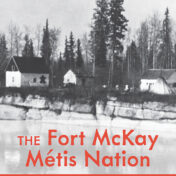
Ultimately, The Fort McKay Métis Nation: A Community History makes a vital contribution to Métis historiography and to the growing body of scholarship that centers Indigenous voices in historical research. Fortna’s work is respectful, informed, and grounded in his deep connections with the community. In a time when questions of Indigenous rights, land, and sovereignty remain urgent, this book offers both historical grounding and forward-looking insight into the future of Métis political and social movements. Accessible to both scholars and community members, the book’s concise narrative (at 225 pages) ensures its broad appeal, particularly among those interested in Indigenous histories and community-driven scholarship.
With my work now, I try to share engaging and unexpected stories — history that will catch people’s attention — and then connect those stories to their broader historical context. The story of the Toronto Circus Riot for instance — sparked by a brawl between clowns and firefighters at a downtown brothel — has a lot to teach us about the influence of the Orange Order and systems of power in Victorian Toronto. My hope is that if I can catch someone’s attention, provide them with some of that broader context, and point them toward the work of historians who’ve explored that context more deeply, that person might be curious enough to want to carry on learning more.