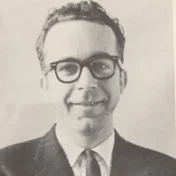
Overall, we believe that Canadians can, and should, scrutinize Robert Carney’s past views on schooling for Indigenous Peoples, press Mark Carney to clarify his commitment to truth and reconciliation, and challenge the twisting of truth by residential school denialists. Doing all of these things can demonstrate truth and reconciliation leadership and help build a more honourable future. Unlike the denialists, then, our task is to guide public understanding with nuanced, historical work that promotes empathy, understanding, healing, and justice.
June Chow The right to know through Canada’s Access to Information Act and the right to personal privacy under the Privacy Act hang in perpetual balance at our national archives. In 2021, an ATIP request submitted to Library and Archives Canada (LAC) sought to open a set of historical government records that remained Restricted within its Chinese Immigration records series, namely, C.I. 44 forms and… Read more »
Gilbert Gagné This is the third post in a series on tariffs based on a roundtable organized at Bishop’s University in February 2025. Read the introduction by David Webster here and the first post by Heather McKeen-Edwards here. The second post by Gordon S. Baker appears here. Everything seems to be about tariffs now; how exposed to potential US tariffs… Read more »
David Webster— Tariffs on you!— No, bigger tariffs on you!— No, I have the biggest, most beautiful tariffs, and I am slapping them on you! Anyone could be excused for thinking it was a battle of toddlers. But this is deadly serious: a trade war, one that reminds us of moments of trade tension between Canada and the United States… Read more »
ActiveHistory.ca is on it’s summer hiatus, but we’ll be back with new content in mid-August. During the hiatus, we’re featuring some of our most popular and favourite posts from the past year. Thanks as always to our writers and readers.Originally published on March 13, 2025By Robert Englebert The tariff war has begun. Since coming into office only weeks ago, Donald… Read more »
Alan MacEachern Last year, an email informed me of a death. Two, actually. Top Hat would no longer publish Origins: Canadian History to Confederation or Destinies: Canadian History since Confederation as either print or e-books. These twin textbooks, once as much staples of Canadian history survey courses as, well, the staples thesis, were being discontinued due to low demand. Origins… Read more »
Daniel R. Meister It’s part of the craft of writing: a “killer quote” that powerfully demonstrates the point the author is trying to make. Taken from a primary source, it can become the most quoted part of the secondary piece in which it appears. And when loosed from its moorings to the publication that contextualizes it, the quote is carried… Read more »
Erika Dyck and Jim Clifford The COVID-19 pandemic tested healthcare systems worldwide and pushed many of them to the breaking point. Canadians experienced the pandemic in diverse ways depending on where and how they lived, from single-family dwellings with converted virtual workspaces to long-term-care facilities with rigorous lock-down policies or First Nations reserves with inconsistent access to potable water, but… Read more »
Jim Clifford and Stéphane Castonguay will lead a walking tour on Sunday June 16 at 7pm starting at Victoria Square in Montreal. Towers of Grain: Feeding Edwardian Britain Silo number 1, built in 1902 in the Port of Montreal, linked the burgeoning wheat farms on the Prairies with the urban markets in the United Kingdom. New industrial-scale flour mills were… Read more »
Virginie Belony As the situation in Haiti becomes increasingly complex and challenging for many observers to comprehend, delving into Haiti’s past and the experiences of its diaspora here in Canada can offer valuable insights and examples of resilience, resistance, and community mobilization. The election of François Duvalier as President of Haiti in September 1957 marked the onset of a period… Read more »