Stéphane Castonguay and Colin Coates This is the ninth post in a series about the Great Acceleration as a framework and reconnaissance for Canadian environmental history. The posts in this series are cross-posed with NiCHE The relationship between agriculture and the Anthropocene unfolds across a temporal and conceptual spectrum punctuated by the various proposals for a “Golden Spike.”1 At one end… Read more »
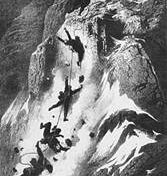
Dani K. Inkpen “History should make you feel weird.” So proclaims a widely touted slogan of history nerds. While there is much in the world foisting weirdness upon us today, too rarely do we intentionally seek the off-beat. History students should. “Weird,” though it has come to mean uncanny or bizarre, has its roots in the idea of the turning… Read more »
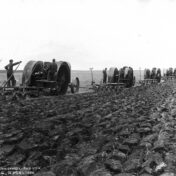
Jim Clifford When did the Great Acceleration start? Saskatchewan might hold the answer. Between the 1890s and the 1930s, the settler population exploded, and these newcomers broke 20 million acres of prairie grassland into wheat farms. The transformation released vast quantities of CO2 held in the soil and was inseparable from the genocidal dislocation of Indigenous people from their land.1… Read more »
Andrew Burke This is the seventh post in a series about the Great Acceleration as a framework and reconnaissance for Canadian environmental history. The posts in this series are cross-posted with NiCHE It is fundamentally about change; constant, rapid change. J. R. McNeill and Peter Engelke described the Great Acceleration, in part, as “what is certainly the most anomalous and unrepresentative period in… Read more »
Shannon Stunden Bower This is the sixth post in a series about the Great Acceleration as a framework and reconnaissance for Canadian environmental history. The posts in this series are cross-posted with NiCHE. In The Great Acceleration, J.R. McNeill and Peter Engelke proposed four paired concepts as avenues into the global transformations they see as defining the period from the end of World… Read more »
Alicia Carefoote This is the fifth post in a series about the Great Acceleration as a framework and reconnaissance for Canadian environmental history. The posts in this series are cross-posted with NiCHE. When environmental historians describe the “Great Acceleration,” they usually point to dramatic post-Second World War transformations in human activity.1 Carbon emissions surged. Industrial production expanded. Highways, suburbs, pipelines, and hydroelectric megaprojects reshaped… Read more »
Josh Sandlos This is the fourth post in a series about the Great Acceleration as a framework and reconnaissance for Canadian environmental history. The posts in this series are cross-posted with NiCHE. Each year in my “Canadian History Since Confederation” survey class, I take my students on a deep dive into something that has high potential to be boring: Statistics Canada tables on historical… Read more »
John W. Bessai This is the third post in a series about the Great Acceleration as a framework and reconnaissance for Canadian environmental history. The posts in this series are cross-posted with NiCHE. Lake Diefenbaker concentrates the Great Acceleration within one prairie watershed. It shows how postwar Canada joined environmental transformation, settler state authority, hydraulic control, agricultural expansion, and the reordering of Indigenous… Read more »
Daniel Macfarlane This is the second post in a series exploring the potential of the Great Acceleration as a framework and reconnaissance of Canadian environmental history. The posts in this series are cross-posted with NiCHE. If the Great Acceleration – the dramatic increase in human activity and the resulting impact on the Earth’s natural systems since the mid-20th century – is a… Read more »
Andrew Watson This is the first post in a series exploring the potential of the Great Acceleration as a framework and reconnaissance of Canadian environmental history. The posts in this series are cross-posted with NiCHE. In 2016, J.R. McNeill and Peter Engelke made the bold prediction that “the Great Acceleration will not last long. It need not and cannot.”1 A decade later,… Read more »