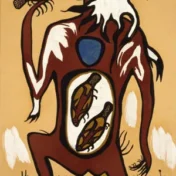
By Jenni Makahnouk This post is part of the Indian Act 150 series The Indian Act is commonly treated as a governance structure: an object to be interpreted, amended, or dismantled through policy reform. This framing assumes neutrality where there is appetite. This article argues that the Indian Act functions less as a static legal instrument and more as a… Read more »
February 2026 marks the 30th anniversary of the first national celebration of Black History Month in Canada. This milestone offers an important opportunity to recognize the enduring legacy and resilience of Black Canadians and to reflect on a history that has often been overlooked. Canadian historians especially must confront the mythology that depicts Canada solely as a haven from racism…. Read more »
Kristen Jeanveau Collection of materials from the file of Harry George Dickson R/18077. Courtesy of the Ley and Lois Smith War Memory, and Culture Research Collection, Western University. For the last two years, I have been a Graduate Teaching Assistant for History 1810: Wars that Changed the World at Western University. For many students, the world wars are a remote… Read more »
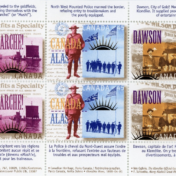
By Patricia Roussel and David Dean This post is part of the Canada Post and Canadian Culture series. This is the first post in a limited series dedicated to studying the history of Canada Post. Inspired by recent 2025 labour disputes and renewed public conversation about Canada Post, the intention here is to examine the cultural impact and historical legacy of… Read more »
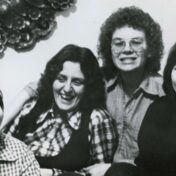
By Alisha Stranges and Elspeth H. Brown Ange Beever, digital illustration by Ayo Tsalithaba for The Pussy Palace Oral History Project, LGBTQ Oral History Digital Collaboratory. 2025. “When they first came in, I was pissed off that they had crashed the party. […] like these stupid men tromping through this place. I’m just like, ‘You look like idiots. You’re stupid…. Read more »
Daniel R. Meister In the first part of an article I published with Active History in February 2024, I contested the authenticity of a quote frequently attributed to Pierre Elliott Trudeau. The quote in question: “We’ll keep them in the ghetto as long as they want” with regard to First Nations in Canada. However, while in search of a different quote recently,… Read more »
Andrew Watson Proposal Deadline: 18 February 2026 Extended to 25 February 2026 As a social and political idea, as much a material and socioeconomic reality, Canada is a child of the Anthropocene. If the Earth has shifted from the Holocene into a new epoch of planetary history, then Canada has served as an incubator for its defining concepts, a laboratory for the… Read more »
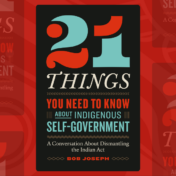
By Bob Joseph This post is part of the Indian Act 150 series. This year, 2026, marks 150 years of the Consolidated Indian Act of 1876. This serves as a timely opportunity to discuss the dismantling of this destructive and restrictive piece of legislation. The Indian Act has constrained and controlled the lives of Status Indians for generations, and reconciliation… Read more »
ActiveHistory.ca is on it’s summer hiatus, but we’ll be back with new content in mid-August. During the hiatus, we’re featuring some of our most popular and favourite posts from the past year. Thanks as always to our writers and readers.Originally published on January 21, 2026Meredith J. Batt I have made an error. These are not words that come easily to… Read more »
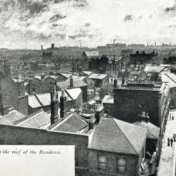
Katherine Wilson-Smith “A View From the Roof of the Residence.” Twenty One Years at Mansfield House, 1890-1911. Plaistow: W. S. Caines, 1911. 1. “From the roof of the Settlement one looks over a vast, monotonous, dingy sea of houses, acre upon acre, mile upon mile, in long rigid rows – like frozen waves of the grey sea – broken only… Read more »