Shannon Stunden Bower This is the sixth post in a series about the Great Acceleration as a framework and reconnaissance for Canadian environmental history. The posts in this series are cross-posted with NiCHE. In The Great Acceleration, J.R. McNeill and Peter Engelke proposed four paired concepts as avenues into the global transformations they see as defining the period from the end of World… Read more »
Daniel R. Meister In the first part of an article I published with Active History in February 2024, I contested the authenticity of a quote frequently attributed to Pierre Elliott Trudeau. The quote in question: “We’ll keep them in the ghetto as long as they want” with regard to First Nations in Canada. However, while in search of a different quote recently,… Read more »
John Price This is the second post in a two-part series based on a recently published article in the International Journal, “Resisting Palestine’s Partition: Elizabeth MacCallum, the Arab World and UN Resolution 181(II).”Part One is available here. The balance of evidence does suggest that Canada contributed more than any other country, including the USA, to the establishment of Israel. As… Read more »
Daniel R. Meister It’s part of the craft of writing: a “killer quote” that powerfully demonstrates the point the author is trying to make. Taken from a primary source, it can become the most quoted part of the secondary piece in which it appears. And when loosed from its moorings to the publication that contextualizes it, the quote is carried… Read more »
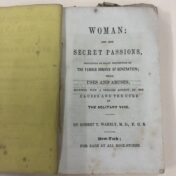
Gemma Marr “The luxurious habits of civilized life lead to many excesses. Those of gluttony and hard drinking have been sufficiently commented upon. Tracts and newspapers showing the fatal results of intoxication, surround us on all hands. But an evil more destructive than any of these has received, comparatively, but little attention. It is time that the warning was given,… Read more »
Jennifer Bate Indigenous peoples have used their deep-rooted understanding of the land and wildlife to feed their families and communities for generations. However, by the end of the 19th century, First Nations communities in Northwestern Ontario found their traditional way of life threatened by encroaching settlement and new government-imposed hunting legislation. Although early game laws contained clauses exempting First Nations… Read more »
Tamara Gene Myers Amidst the call to “Defund the police,” it bears thinking about removing police from our schools as well. “Defund the police” has become the rallying cry of anti-Black racism protests following the public murder of George Floyd by a Minneapolis police officer. Relentless police violence has generated heated discussion about how decades of policies intended to “reform”… Read more »
Jennifer Tunnicliffe On December 13, 2019, Justin Trudeau sent out a series of mandate letters to his newly appointed Cabinet ministers, outlining their policy objectives for the upcoming session of Parliament. In several of these letters, Trudeau urged initiatives to combat online hate and counter hate speech.[1] Heritage Minister Steven Guilbeault was instructed to develop new social media guidelines requiring… Read more »
R. Blake Brown In September 2016 the Aspen Institute, a non-partisan American think-tank, held a symposium entitled “Firearms and the Common Law Tradition” at the Institute’s headquarters in Washington, D.C. The conveners of the symposium, historian Jennifer Tucker of Wesleyan University, curators Margaret Vining and Bart Hacker of the Smithsonian National Museum of American History, and Ruth Katz of the… Read more »
The practice of history, however, is not a zero sum game in which historians can isolate themselves from outside influences. The research, writing and teaching of academic, policy-oriented, and popular history are deeply political, social and ideological pursuits. Whether historical research is intended to ‘add value’ or ‘make an impact’ is only one component of many that shape historical perspective.