
Podcast: Play in new window | Download
By Sean Graham
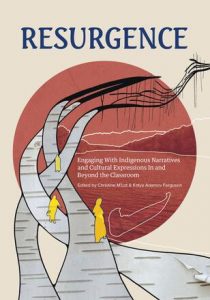 In its final report, the Truth and Reconciliation Commission included several Calls to Action regarding education. One of these was to develop and implement learning resources for all students in Canada so that more Indigenous voices, perspectives, and approaches were included in provincial and territorial curricula. As we’ve seen, however, some efforts to do this have not gone well. Fortunately, with better resources being made available to teachers, so many of whom are exhausted from over two years of pandemic teaching, the situation is slowly improving.
One such resource for teachers is Resurgence, a new volume edited by Christine M’Lot and Katya Adamov Ferguson. Organized using the 4-Rs – Resistance, Resilience, Restoring, and Reconnecting – it includes poetry, art, and narratives from a diverse group of Indigenous artists and writers. The book also includes resources for teachers that range from discussion questions to strategies for introducing Indigenous learning into classrooms. With material that can be used across provincial and territorial curricula and implemented in classrooms from elementary through high school, Resurgence is a terrific addition to the available educational material. Even if you’re not in an educational environment, though, you’re very likely to find plenty in the book to not only keep you interested, but to also learn/discover something new.
In this episode of the History Slam, I talk with Christine M’Lot about the book. We discuss her education background and how that influenced the project (3:45), the 4-R framework and how the book is organized (8:15), and its ability to be used across educational systems (14:14). We also chat about the editors’ learning process (22:31), how audiences can approach the material and Indigenous learning (29:03), and the benefits of meaningfully incorporating Indigenous voices into classrooms (34:42).
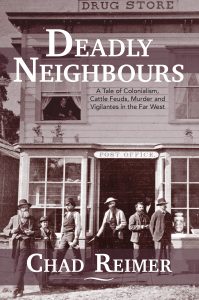 On February 24, 1884, Louie Sam, a Stó:lo teenager, was accused by an angry mob of starting a fire that killed James Bell, a shopkeeper in the settler community Nooksack, in what is now Whatcom County, Washington, which borders British Columbia. Without any evidence, the assembled mob determined that Sam was responsible and, despite him being arrested by Canadian authorities, crossed the border, took him by force, and hanged him. Nobody was ever arrested for Sam’s death, which simultaneously stands a rare documented lynching in Canada as well as a powerful example of the violence associated with colonialism.
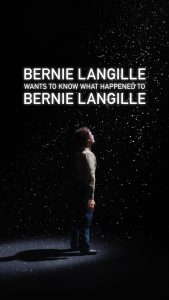 On a cold February night in 1968, Bernie Langille drove his friends to play darts and have a drink at CFB Gagetown. The next morning, his wife found him bloody and bruised in bed without knowing what happened. He was taken to the base’s hospital where it was recommended he be flown to Halifax for immediate treatment. After a 4-hour delay in ordering the flight, an assault by one of the doctors, and his ambulance being in a collision with a train, he finally made it to the hospital in Halifax, but it was too late. The rather unusual circumstances of Langille’s death led to many questions for his family and speculation by the community. Over 50 years later, the deep pain remains for the Langille family and has led Bernie Langille’s grandson – also named Bernie – to revisit his grandfather’s death in a search for truth and healing.