By Oscar Winberg
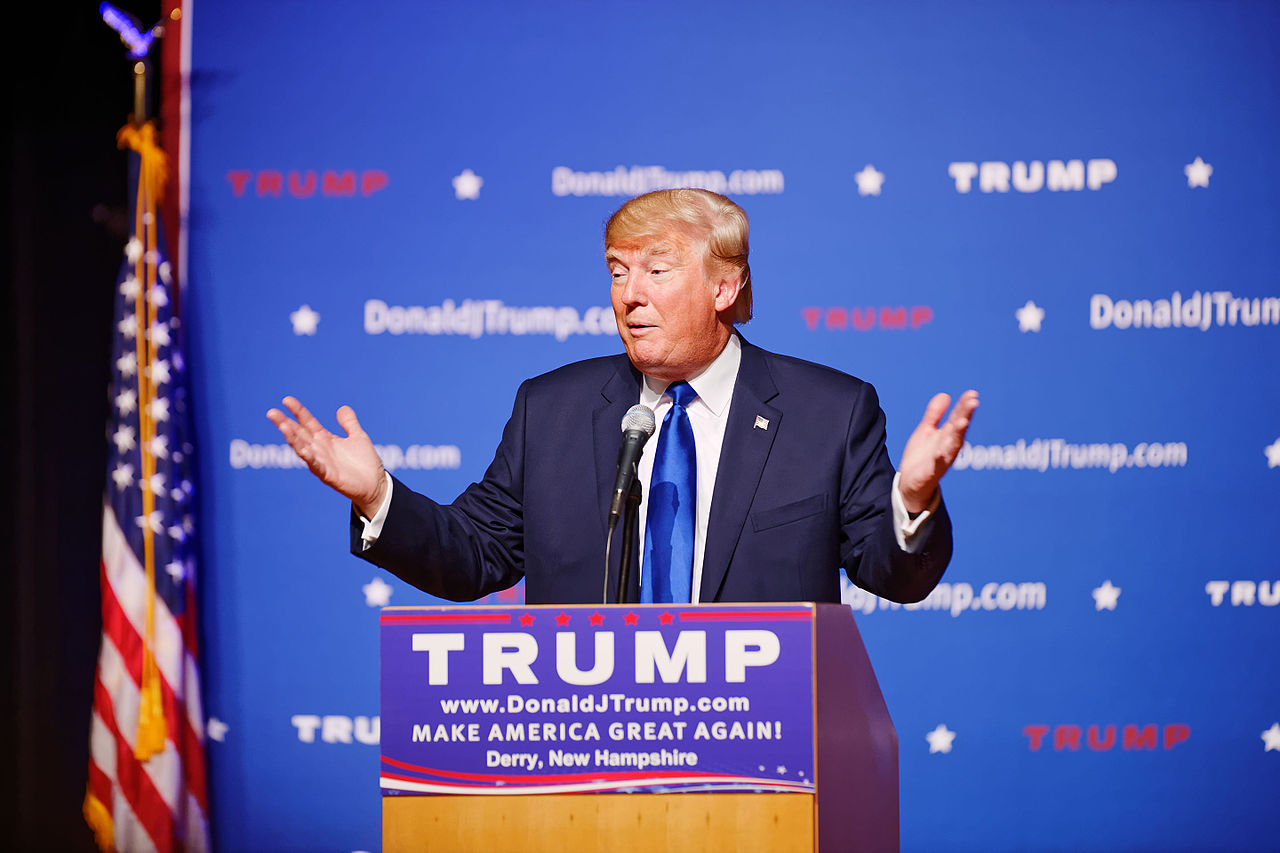
Donald Trump, August 2015. Michael Vadon/Wikipedia Commons.
The U.S. presidential campaign is already in full swing, even though it is roughly five months before the first ballot will be cast in the primaries and caucuses that select the major party nominees, and over a year until the people will actually elect the 45th president. This summer much of the coverage has been reserved for a candidate more familiar from reality television than electoral politics; Donald Trump. Polls show Trump leading the considerable line-up of candidates the Republican Party presents, and on account of the polls – and to the despair of political scientists – the media is considering him something of a favorite. If one disregards the polls, or looks beyond the main numbers to focus on favorability ratings and other more relevant information that does not correlate so closely with name recognition and media coverage, there is really nothing that points to Trump having any serious chance of capturing the Republican nomination. Historians might come up with spectacular political surprises from yesteryear, but the influential political science monograph The Party Decides: Presidential Nominations Before and After Reform (2008) makes it clear that Trump will not find any encouragement in recent political history.
Instead, Trump’s influence in 2016 might come as a third party candidate. Continue reading
 In recent years, non-experts, with the Harper government leading the way, have advocated and pushed for a conservative rewriting of Canadian history in an effort to find “heroes”