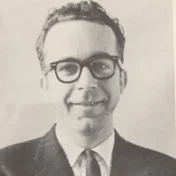
Donald Wright When I learned that Jim Miller had died, I reached out to his partner, Lesley Biggs, to express my condolences. A few weeks later, she invited me to share a few words about him that would be read at his celebration of life. “It would be my honour,” I replied. And I meant it. Jim was something of… Read more »
From Harbour to Horizon: Recharting Atlantic Canada Studies The Faculty of Arts at the University of Prince Edward Island is pleased to host the 2026 Atlantic Canada Studies Conference in Charlottetown, Prince Edward Island, from 3-5 June, 2026. The meeting will overlap with the final day of the Canadian Historical Association (CHA) which meets from 1-3 June. Although there may… Read more »
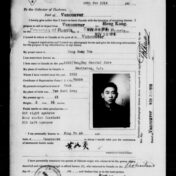
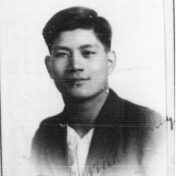
June Chow This post is a sequel to The right to remember the past: Opening Chinese immigration records in Canada’s national archives published on March 27, 2025. It is adapted from a presentation made on June 11, 2025 at the Association of Canadian Archivists conference held at Carleton University (Ottawa, Ontario) to an audience that included Librarian and Archivist of Canada, Leslie… Read more »
Laura Ishiguro, Nicole Yakashiro and Ayaka Yoshimizu What can one racialized migrant woman’s life teach us about resistance and community-building in today’s context of rising conservatism, nationalism, and securitization? The open educational resource (OER) we’ve created centres on the life of Kiyo Tanaka-Goto, a Japanese woman who lived much of her adult life in Vancouver’s Downtown Eastside (DTES), especially during the interwar… Read more »
John Price This is the second post in a two-part series based on a recently published article in the International Journal, “Resisting Palestine’s Partition: Elizabeth MacCallum, the Arab World and UN Resolution 181(II).”Part One is available here. The balance of evidence does suggest that Canada contributed more than any other country, including the USA, to the establishment of Israel. As… Read more »
John Price This is the first post in a two-part series based on a recently published article in the International Journal, “Resisting Palestine’s Partition: Elizabeth MacCallum, the Arab World and UN Resolution 181(II).” The second post in the series is available here. “I am a Zionist,” declared Justin Trudeau just before stepping down as prime minister. “No one in Canada,” he stated,… Read more »
This is the final post in a three-part series about socialism at McGill in the 1930s. Raffaella Cerenzia 1930s McGill was a small, tight-knit place. Only 3,000 or so students roamed the university’s campus. They were taught by a short roster of professors; the Department of Economics and Political Science numbered just six in the early thirties. In this intimate… Read more »
Andrew R.S. Marchese As Canadians continue to reflect on the centennial of the 1923 Chinese Immigration Act (Exclusion Act), growing attention is being paid to the everyday, untold stories of those who resisted its harsh impact. Likewise, there has been a hunger for historical figures that highlight complexities and intersectional identities in both a community and national-historical context. Among the… Read more »
The Indigenous and Northern Housing plan within Canada’s current National Housing Strategy is a good start, but it does not go nearly far enough to meet the long-standing housing needs of First Nations communities. With the new Liberal platform prioritizing the rapid development of affordable and sustainable homes, Prime Minister Mark Carney has a chance to begin remedying some of the historical and ongoing injustices that First Nations peoples encounter regarding housing on reserves. This can be accomplished by integrating the AFN’s proposal into the National Housing Strategy, providing a streamlined process for First Nations to benefit, and working directly with First Nations to meet the specific needs of each community, steering clear of the paternalistic dynamics that have largely fueled the housing crisis experienced by First Nations communities throughout Canada.
Overall, we believe that Canadians can, and should, scrutinize Robert Carney’s past views on schooling for Indigenous Peoples, press Mark Carney to clarify his commitment to truth and reconciliation, and challenge the twisting of truth by residential school denialists. Doing all of these things can demonstrate truth and reconciliation leadership and help build a more honourable future. Unlike the denialists, then, our task is to guide public understanding with nuanced, historical work that promotes empathy, understanding, healing, and justice.