By Sean Graham Sean Graham talks with Caitlin Keliiaa, author of Refusing Settler Domesticity: Native Women’s Labour and Resistance in the Bay Area Outing Program. They discuss the residential schooling system in the United States, the goal of outing programs, and Indigenous young women and girls’ domestic labour as part of the program. They also chat about the community built… Read more »
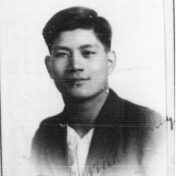
Andrew R.S. Marchese As Canadians continue to reflect on the centennial of the 1923 Chinese Immigration Act (Exclusion Act), growing attention is being paid to the everyday, untold stories of those who resisted its harsh impact. Likewise, there has been a hunger for historical figures that highlight complexities and intersectional identities in both a community and national-historical context. Among the… Read more »
Active History is hiring a part-time site manager. Come work with us! Site Manager, Active History Qualifications: Duties: Reports to: the editorial collective of Active History (represented by two editors) Hours and pay: 10 hours per week. Pay commensurate with education and experience. $26-30 per hour, plus benefits. Duration: 1 year contract with possibility of renewal for up to 3… Read more »
By Sean Graham This week I talk with John M. Efron, author of All Consuming: Germans, Jews, and the Meaning of Meat. We discuss the relationship between Jewish culture and meat consumption, the unique relationship between Germans culture and Jewish meat, and how that has been depicted over the years. We also chat about the cultural significance of meat and meat… Read more »
By Sean Graham This week I talk with Peter Fortna, author of The Fort McKay Métis Nation: A Community History. We talk about the origins of the Nation, which is located in northeastern Alberta, the community connections between the Métis and First Nation, and how colonial government structures have influenced community relationships. We also discuss the role of resources and… Read more »
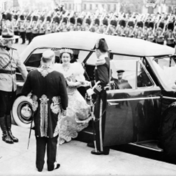
The case of the Queen’s Dress illustrates the strength of some Canadians’ fascination with royal clothing and the messages it can send. To Elizabeth Delafield, the dress was an inspiring souvenir of a magical moment. To federal officials, including archivist Gustave Lanctôt, it recalled an important episode in Canada’s constitutional evolution, the first time a reigning monarch had presided in Parliament. For the ROM’s C.T. Currelly, it commemorated Canada’s war contributions, but mainly contributed to an ambitious collections and exhibition project on historical clothing. The fight over the frock also revealed the divisions and jealousies among Canada’s emerging heritage institutions, whose mandates were, as yet, broadly defined and sometimes overlapping. Sleeveless though it was, the Queen’s Dress inspired custodians of the nation’s memory to put their elbows up – if only to assert or defend their own institutional turf.
If the present crisis, defined by a rising and self-confident politics of reaction, is understood historically as the diseased radicalization rather than the demise of neoliberalism, perhaps we might yet make a proper interregnum of our time. That is, we might begin to struggle toward a new order, doing so not with inherited instruction manuals but instead with new ones born from “a spirit that embraces the notion of a deep and indeed unsettling transformation of society.” As diseased neoliberalism continues to self-generate all measure of morbid symptoms, we might find suddenly that there is all the more collective will to give it the death it deserves.
By Sean Graham This week I talk with Judith Weisenfeld, author of Black Religion in the Madhouse: Race & Psychiatry in Slavery’s Wake. We discuss about the origins of the book, how the antebellum period shaped perceptions of African American religion, and the role of ‘religious excitement’ in insanity diagnoses. We also chat about the connections between race and religion,… Read more »
by Meredith J. Batt Atlantic Canadian port cities have some of the most colourful and vibrant queer spaces and stories. Saint John, New Brunswick is no exception. In 2020, the first summer of the pandemic, I celebrated my 25th birthday in Saint John by attending a drag show hosted by Justin TooDeep (portrayed by Alex Saunders) and Saint John’s jewel of… Read more »
The Indigenous and Northern Housing plan within Canada’s current National Housing Strategy is a good start, but it does not go nearly far enough to meet the long-standing housing needs of First Nations communities. With the new Liberal platform prioritizing the rapid development of affordable and sustainable homes, Prime Minister Mark Carney has a chance to begin remedying some of the historical and ongoing injustices that First Nations peoples encounter regarding housing on reserves. This can be accomplished by integrating the AFN’s proposal into the National Housing Strategy, providing a streamlined process for First Nations to benefit, and working directly with First Nations to meet the specific needs of each community, steering clear of the paternalistic dynamics that have largely fueled the housing crisis experienced by First Nations communities throughout Canada.