By Andrew Nurse I like reading old newspapers and I know that is not out of place for an historian. In one way or another, media are history’s life blood, even if we don’t all make use of them in the same way. The range of media at which historians look is broad. It includes posters and recordings, maps and… Read more »
John Price This is the second post in a two-part series based on a recently published article in the International Journal, “Resisting Palestine’s Partition: Elizabeth MacCallum, the Arab World and UN Resolution 181(II).”Part One is available here. The balance of evidence does suggest that Canada contributed more than any other country, including the USA, to the establishment of Israel. As… Read more »
John Price This is the first post in a two-part series based on a recently published article in the International Journal, “Resisting Palestine’s Partition: Elizabeth MacCallum, the Arab World and UN Resolution 181(II).” The second post in the series is available here. “I am a Zionist,” declared Justin Trudeau just before stepping down as prime minister. “No one in Canada,” he stated,… Read more »
Erin Gallagher-Cohoon In June 1968, a young woman petitioned the Nova Scotia Court for Divorce and Matrimonial Causes for a dissolution of marriage on the grounds of legal cruelty. She had lived with her husband in both Halifax and Western Shore in Lunenburg County for five years before briefly separating in 1965 and then again, this time for good, in 1967. They… Read more »
The Squamish Nation’s Yúusnewas project demonstrates the importance of data sovereignty, big data analysis, and the need for collaborative, community-engaged residential school research as part of the ongoing work of taking care of Survivors and everyone.
Francesco Coirazza “Multiculturalism finally no longer applies to Quebec! […] It’s a model that has always been harmful to Quebec,” claimed Minister of the French Language Jean-François Roberge in the salon rouge of the Quebec legislature on 28 May 2025. On that day, Quebec’s National Assembly passed Bill 84: An Act Respecting National Integration, a controversial law introduced by the… Read more »
Nancy Janovicek and Karissa Patton On July 10, the Alberta government introduced new standards for school libraries “to ensure school library materials are age-appropriate.” The ministerial order responds to a group of parents who raised concerns about sexual acts, drug and alcohol use, derogatory language, and self-harm in coming-of-age-books available in school libraries in May. The government launched a survey… Read more »
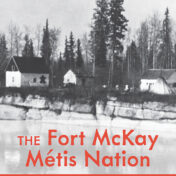
Ultimately, The Fort McKay Métis Nation: A Community History makes a vital contribution to Métis historiography and to the growing body of scholarship that centers Indigenous voices in historical research. Fortna’s work is respectful, informed, and grounded in his deep connections with the community. In a time when questions of Indigenous rights, land, and sovereignty remain urgent, this book offers both historical grounding and forward-looking insight into the future of Métis political and social movements. Accessible to both scholars and community members, the book’s concise narrative (at 225 pages) ensures its broad appeal, particularly among those interested in Indigenous histories and community-driven scholarship.
With my work now, I try to share engaging and unexpected stories — history that will catch people’s attention — and then connect those stories to their broader historical context. The story of the Toronto Circus Riot for instance — sparked by a brawl between clowns and firefighters at a downtown brothel — has a lot to teach us about the influence of the Orange Order and systems of power in Victorian Toronto. My hope is that if I can catch someone’s attention, provide them with some of that broader context, and point them toward the work of historians who’ve explored that context more deeply, that person might be curious enough to want to carry on learning more.
Mack Penner and Edward Dunsworth In his case for “steering a middle course” on the use of artificial intelligence (AI) in the history classroom, written partially as response to earlier pieces by each of us, Mark Humphries makes a number of points with which we agree. First among those points of agreement are the value of a historical education and… Read more »