Tuck and Yang’s Decolonization is not a metaphor provides an interesting touchpoint to identify a pattern of “settler moves to innocence.” What does this mean, and what is the pattern? As Indigenous peoples are literally removed from the land and disposed of its resources such as hunting and fishing, but also access to natural resource revenue, they are also figuratively removed and replaced with appropriated words, such as Sakaw. This is an instance that Tuck describes as “settler nativism” where setters attempt to “deflect” their identity by appropriating, in this instance, Indigenous words to be used as place names. There are many instances of this in Canada – itself a place name rooted in an Iroquoian language
This pattern is rooted in colonial and patriarchal power. The settler claims control the land through displacement and replacement of Indigenous peoples. In this specific instance, the Papaschase First Nation who occupied Reserve 136. Settlers, such as those on the Names Advisory Committee and City Council, then use Indigenous words (i.e. Sakaw) as place names to assuage feelings of guilt. This “move to innocence” allows for a feeling of moral resolution without addressing the ongoing colonial structures that led to the theft of land in the first place.
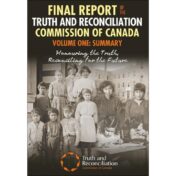
To date what has become painfully clear is that the responsibility and burden of truth telling has fallen largely on Indigenous Peoples, communities, and Nations. Survivors have been forced to continue to fight the church and state in court to have their records released and their experiences validated. We only have to consider the infamous St. Anne’s Residential School, where Survivors are in a legal battle for their records. According to Veldon Coburn, the continued failure of Indigenous and Northern Affairs[3] to release these illustrates,
There is no difference between the suppression of the truth and denial of the truth. Both tactics – whether deployed to advance reconciliation or resist it – subordinate Indigenous Peoples and their truth of Residential Schools and the integral part this system of cultural genocide played in colonialism.
By Sean Graham This week I talk with Lynne Gouliquer and Carmen Poulin ahead of their Shannon lecture on Monday November 24 entitled “Purging the Canadian Military of ‘Sexual Deviants’: The War on 2SLGBTQIA+ Members and Their Partners from the 1960s to Present.’ We talk about the administrative order that established the policy of purging homosexuals from the military and… Read more »
By Andrew Nurse On November 15, a media release announced that Pope Leo XIV, following an audience with members of the Canadian Roman Catholic hierarchy, “gifted sixty-two artefacts belonging to the ethnological collections of Vatican Museums.” This meant that the Vatican would begin a process of repatriating some aspects of Indigenous culture currently held in its museums to First Nations,… Read more »
The rich history of drag has strong roots in Atlantic Canada; one notable example being Ross Hamilton, the famed female impersonator from the concert party troupe the Dumbells. During and following the First World War, Hamilton not only brought pride to Canada with his ability to craft the perfect illusion of womanhood, but also to Nova Scotia, as a resident of the province. Although queer desire was criminalized by the Canadian military, drag entertainment was seen as a necessity to support the flagging morale of troops.
Avery Monette In the early morning hours of Thursday, February 19, 1942, residents of Winnipeg and the surrounding towns were shaken from their sleep by the sound of air raid sirens. German Luftwaffe bomber planes had begun their attack on the Prairies and by 9:30 am, Winnipeg had fallen into the clutches of the Nazis. Renamed Himmlerstadt (Himmler City) in… Read more »
Donald Wright When I learned that Jim Miller had died, I reached out to his partner, Lesley Biggs, to express my condolences. A few weeks later, she invited me to share a few words about him that would be read at his celebration of life. “It would be my honour,” I replied. And I meant it. Jim was something of… Read more »
From Harbour to Horizon: Recharting Atlantic Canada Studies The Faculty of Arts at the University of Prince Edward Island is pleased to host the 2026 Atlantic Canada Studies Conference in Charlottetown, Prince Edward Island, from 3-5 June, 2026. The meeting will overlap with the final day of the Canadian Historical Association (CHA) which meets from 1-3 June. Although there may… Read more »
Britain colonised Hong Kong in the 19th century through two treaties, which lasted in perpetuity, and a lease, set to expire in 1997. Much research into Hong Kong’s colonial history relies upon records held at The National Archives in London. With the expiry of the lease on the horizon, in 1983 and 1984, British and mainland Chinese officials negotiated the future of Hong Kong. Negotiations concluded that Britain would hand Hong Kong to China in 1997. Much research into Hong Kong’s colonial history relies upon records held at The National Archives in London. There is another cache of Hong Kong records in the UK but it remains unavailable to researchers and the wider public. In 2011, the British Government admitted it was holding tens of thousands of files created by colonial governments and shipped to the UK on the eve of decolonisation. It subsequently committed to releasing all of these files (save for those exempted on legal grounds). Over the course of a few years, some 20,000 records originating in 40 former colonies were made available at The National Archives as series FCO 141, known as the ‘migrated archives’. Yet files from Hong Kong were not amongst those opened.
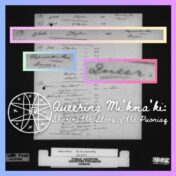
In the Mi’kmaw language, puoin (boo-oh-in) refers to a shaman or witch. In Mi’kmaki — the area we now call Atlantic Canada and parts of Maine and Québec—these puoinaq (plural of puoin) are sacred figures who possess the ability to shapeshift and to convoke the spirit world. Inspired by Mi’kmaw History Month, this installment of Queering Atlantic Canada troubles our understanding of region with Indigenous methodologies; it also offers a method to queering Indigenous history and culture through the Mi’kmaw language and storytelling alongside our own against-the-grain readings of the colonial record.