Warrant Officer Daniyal Elahi, 337 Queen’s York Rangers Royal Canadian Army Cadets Growing up, I often felt as though Muslim Canadians were a recent part of this country — as if our connection began only in 1965, when my grandfather immigrated from Pakistan. In school, the Canadian soldiers we learned about seemed to share the same background and the same… Read more »
Ella Prisco This essay is part of a 2-part series. See the other entry here. “They have borne the lonely hours with fortitude,” stated the Winnipeg Citizen in its coverage of scabbing women during the Winnipeg General Strike of 1919.[1] Indeed they had, taking up positions as telephone switchboard operators and waitresses in response to the nearly thirty thousand workers… Read more »
By Aaron Boyes & Sean Graham It’s hard to believe that we’re already half-way through the 2020s, which means that we are now one hundred years removed from events of 1925. As with past editions (see the end of the post for links to all our previous editions), we use historical hindsight to analyze and debate what was the most… Read more »
Ella Prisco This essay is part of a 2-part series. The second post will be published next week. Depending on who you asked, Winnipeg on May 15, 1919 was either a city in chaos or on the precipice of a brave new world. It was the first day of the Winnipeg General Strike, the culmination of weeks of tension between… Read more »
By Sean Graham This week I talk with Katherine Rollwagen, author of The Scramble for the Teenage Dollar: Creating the Youth Market in Mid-Century Canada. We discuss the creation of the ‘classic’ teenager, how marketing shifted to attract young people, and how much family considerations shaped advertisements. We also chat about Eaton’s, how it attracted teenagers to the store, and… Read more »
Author Carol F. Lee explores the writings of her mother Mary Quan Lee, with a focus on her experiences in the 1930s and her sense of dual Canadian and Chinese identity in the 1940s. Lee notes that her mother’s identity was shaped in large part by openings and closings in opportunities and the structural realities of exclusion in Canada.
By Sean Graham This week I talk with Peggy Nash, one of the co-authors of Women United: Stories of Women’s Struggles for Equality in the Canadian Auto Workers Union. We discuss women’s contributions to the union in its early years, how negotiating priorities were shaped, and the Second World War’s influence on the labour movement. We also chat about the… Read more »
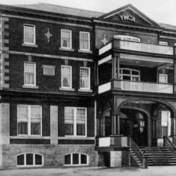
The kinds of assimilatory activities run by the YWCA, and other volunteer associations, were about providing material and ideological support for the Residential School and Indian Hospital system in Canada. The goal was to assimilate Indigenous patients and youth to European-Canadian life outside of Indian Hospitals and Residential Schools, including potential places of employment. We see this in a January 1964 report that reads “The girls from the Upgrading Class and the University girls somehow got into a chat session. It was wonderful to see the young ones who are just starting out gain encouragement and hope from just watching and talking with the ones who have obviously ‘made it’.”[12] The measure of Indigenous Peoples’ “making it” became assimilation through integration requiring the removal and disconnection of Indigenous Peoples from their culture, communities, and land. As in the Habkirk and Ferguson blog, our research implicates the everyday work of service organizations and their volunteers in supporting the colonial project. Where there were shortfalls of money or goods, we see women’s philanthropic work filling gaps. Knowing these histories and acknowledging these connections is integral to enacting Reconciliation because the “burden of truth-telling should not be placed on the shoulders of survivors. Reconciliation requires institutions, governments, and individuals to live up to their own responsibilities and complete and fulfill the TRC’s 94 calls to action. We must all learn the true history of Residential Schools, listen to Survivors and take a stand against those who would deny, distort and minimalize this history.”
As I reflect further on archives and western approaches to historical research, it is clear that institutions of colonial memory are consistently used against Indigenous Peoples as a weapon. This unjust weaponization comes from what is considered accurate information, who has access to its collection, management, and manipulation, and who has the right to challenge its validity. When it comes to representation of Indigenous Peoples in the archives, the responsibility of ‘the what’ and ‘the who’ has often rested solely within documentation obtained from colonial governments and their agents.
All Catholic and Protestant churches in Canada need to undertake this painful work of disentangling the spiritual call to service from the presence of imperialism, colonialism, racism, and white supremacy and hold themselves accountable for supporting the genocidal Residential School program. Although our team members are mapping a way forward to hold the members of this diocese accountable by providing answers to their questions on their journey towards reconciliation, this reflection work needs to be done by individual dioceses, churches, and settlers, as long as they remain open, willing to learn, and brave throughout our research investigations.

![Photo of a typed passage. It reads "Anecdotes by Ruth Fadum. G[redacted], Ward 5A, a little girl was in a body cast. She had T.B. of the spine. She was in a crib with a cover on to keep her in it. When Governor General, The Rt. Hon. Mr. Massey visited, she quietly looked at him, with her mischievous eyes, and he said, "I'll bet you're a holy terror when I'm not here." This was so true because she found all kinds of ways to lower the side of her crib and get out. [Redacted] was sent down from..." The remainder of the text is cut off.](https://activehistory.ca/wp-content/uploads/2025/11/Provincial-Archives-of-Alberta-PR-1991-0443-21-redacted-1-176x176.jpg)