Sara Wilmshurst A few years ago, on this very site, I published an article about combatting vaccine resistance with historical education. Surely, I thought, if people understood how devastating preventable diseases could be, everyone would be eager to roll up a sleeve and be jabbed. Such is the pain of living through historic times. At least I learned something. Like… Read more »
This post by Lilian Radovac and Simon Vickers is part of the “(In)Security in the Time of COVID-19” series. Read the rest of the series here. Alternative Toronto is a DIY digital archive and exhibition space that documents the history of alternative communities in the Greater Toronto Area from 1980 to 1999. As archive director and volunteer coordinator for Alternative… Read more »
Max Mishler’s interview with with Samuel Stein, author of the book Capital City: Gentrification and the Real Estate State (Verso, 2019), is part of the “(In)Security in the Time of COVID-19” series. Read the rest of the series, including a post contextualizing this interview, here. Max Mishler: Hi Sam. Thanks so much for taking the time to think with us… Read more »
This post by Max Mishler is part of the “(In)Security in the Time of COVID-19” series. Read the rest of the series here. Toronto, ON, is the beating heart of Canadian finance capitalism. Global investment banks, mining companies, and consultancy firms dominate the downtown corridor and the Greater Toronto Area (GTA). The city is also home to several professional sports… Read more »
By James Cullingham In 1964 Bob Dylan released The Lonesome Death of Hattie Carrol, one of his masterworks. The song chronicles the circumstances of the atrocious murder of an African American woman and the hypocrisy of the society that produced her killer. As the horrifying revelations from Kamloops and Cowessess of graves at the sites of former residential schools have… Read more »
Comments Off on Death was the Point: Interrupting our shock at colonial practices. Thoughts on the Kamloops discovery.
By Samantha Cutrara Trigger Warning: This article discusses the residential school system. The National Residential School Crisis Line is 1-866-925-4419. When the news came out about the mass grave at Kamloops Indian Residential School located on the Tk’emlúps te Secwépemc First Nation – or the news from this past weekend which identified 104 ‘potential graves’ as part of the Brandon… Read more »
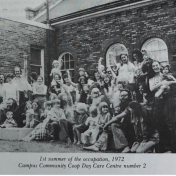
Lisa Pasolli If you know one thing about the history of child care in Canada, it’s probably that it is a story littered with disappointment. Over and over, studies and task forces have called for the building of a universal child care system. Over and over, governments have promised action only to walk back their commitments or have their plans… Read more »
Kevin Anderson In April and May of 1956, Lethbridge, Alberta, Social Credit MP John Blackmore gave two speeches over the radio to his constituents where he claimed that on recent versions of Canadian dollar bills, there was clearly the likeness of a demon hiding in the Queen’s hair. Blackmore related how a correspondent, William Guy Carr, had drawn his attention… Read more »
By Samantha Cutrara What do we mark for remembrance and how do we understand service to this country? These questions may seem straightforward on a day like Remembrance Day, but this day can also invite us to critically examine the concepts of commemoration and service, and provide nuance to the stories of military glory and heroics often featured on this… Read more »
By Thomas Blampied For those following the Canadian railway industry, 2020 was supposed to be a year of celebration. Canadian National Railway (CN), was continuing with its CN100 celebrations to commemorate the 100th anniversary of being bailed out and nationalized by the Canadian government in 1919 (it wasn’t privatized until 1995). The Canadian Pacific Railway (CPR) was to mark the… Read more »