By Andrew Nurse Do midterms have any point? Do tests? Quizzes? Finals? These questions outline the scope of a discussion that recently drew considerable discussion among historians on Twitter.[1] The conversation was both apt and timely. It is apt because it goes to the heart of teaching and learning; it is timely because Covid-19 — and a range of other… Read more »
The students of HIST 5210, Carleton University In just three days, this tweet was liked over 90,000 times. Responses varied from triumphant vindication (take that, students! So many more than 10 likes!) to moral panic (society is crumbling thanks to Twitter). Surprisingly few people recognized it for what it was: playful teasing between students and their professor as they wrapped… Read more »
Evan Habkirk When the Conservative government under Doug Ford came into power in June 2018, they immediately began rolling back curriculum revisions by the Ontario Ministry of Education. Two subject areas affected by these actions were the new sexual education curriculum and the addition of increased Indigenous content to the social studies, history, geography and civics curricula. Although parents, educators,… Read more »
By Skylee-Storm Hogan and Krista McCracken with Andrea Eidinger This post is part of a Beyond the Lecture mini-series, dedicated to the issue of teaching Indigenous history and the inclusion of Indigenous content in the classroom. Our goal is to provide resources for educators at all levels to help navigate the often fraught terrain of teaching Indigenous content. Several studies… Read more »
By Dr. Bathsheba Demuth I came to teach environmental history circuitously: trained as a Russian and American historian, the field was not part of my comprehensive exams. I was never a teaching assistant for an environmental history course—as close as I came was grading for a summer class on the history of energy. I read and wrote my way into… Read more »
Andrea Eidinger and Krista McCracken In March 2018 we launched “Beyond the Lecture” a monthly series on ActiveHistory.ca dedicated to teaching Canadian history at the post-secondary level. This series has – and continues to – create a space to expand perspectives, deepen insights, and challenge assumptions about history education. The series has presented us with an opportunity to both highlight… Read more »
By Andrew Nurse What do you do when a course goes wrong? This is not a title but a question. One that I am asking, perhaps, while treading on thin ice. There is a chance that a student of mine (perhaps even a student in the course that is on my mind) will read this and wonder if I am… Read more »
Samantha Cutrara Digital History (or Digital Humanities and/or Social Sciences, more generally) has exciting possibilities for knowledge mobilization, community engagement, and access to primary documents and secondary analysis. I see Digital History (Humanities/Social Sciences) as being more public-facing than traditional engagements in the discipline(s) because of how the emphasis on the digital forces a more networked approach to both the… Read more »
By the end of this week, students across Canada will be out of school. During their school year, students in Canada would have learnt from the provincially mandated curricula as well as professional attempts at engaging in work of truth and reconciliation. However, while we can talk about the curriculum in our schools, any formal education young people have gained have… Read more »
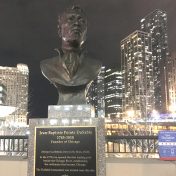
By Thomas Peace Let’s begin with a question: without help from the internet, can you name the person who founded the city of Chicago? I suspect that for many of our readers, the answer is ‘no’. “Founders” are not terribly in vogue these days, anyways. It was, however, the man who founded Chicago that helped me make a profound shift… Read more »