By Samuel Pratt
Betty and Melvin Simpson of Amherstburg, ON opened a small history museum in 1975. They “had a dream to illuminate the history of Black people in a dignified manner,” wanting to promote their town’s extensive involvement in the history of Black Canadians. Known as the North American Black Historical Museum, the museum was built in the former Nazery African Methodist Episcopal Church. Though established in 1848, the congregation had dwindled by the late twentieth century, making their vision possible.
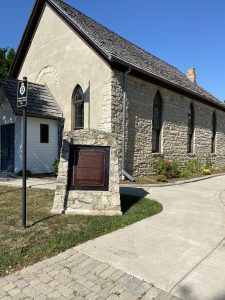
Photo by author.
Named after Bishop Willis Nazery, a prominent Bishop and the first leader of the British Methodist Episcopal Church, the church had historically provided a safe haven for those seeking food, shelter, and clothing, and as a centre for education and community for those who remained residents of Amherstburg.
Despite this legacy, before the museum opened, Black history had often been forgotten or ignored, not just in Amherstburg, but in Canada as a whole. The Simpsons created a space that informed the public about Black history in Canada through educational exhibits and tours. After Melvin’s death in 1982, Betty continued to be involved with the museum until she died in 2014.
While the museum continues to honour their legacy (with plaques, signage, and images of the couple appearing within the museum), some changes have taken place since Betty died. These changes have departed from the Simpsons’ original vision. Most notably, the museum rebranded from the “North American Black Historical Museum” to the “Amherstburg Freedom Museum.”
This name change, which took place in 2015, carries different connotations than the Simpsons’ much broader name by focusing explicitly on Amherstburg’s connections to the Underground Railroad rather than the community’s wider role in Black history. Canada sees its role in the Underground Railroad as “the promised land” wherein generous White Canadians leant aid to Black refugees escaping from the racist and discriminatory United States. By using the term “freedom” in its new name, this rebranding contributes to a common impulse to represent Canada as a “bastion of freedom” for Freedom Seekers. This name change, and associated marketing, somewhat ironically, promotes a vision of Black Canadian history that is directly resisted by the museum exhibits found onsite. Continue reading →