A systematic rounding up of people or things, esp.
The arrest of people suspected of a particular crime or crimes
The rounding up of cattle etc. usu for the purposes of registering ownership, count, etc.
The people and horses engaged in the rounding up of cattle etc.
A summary, a resume of facts or events.
The Canadian Oxford Dictionary, 2nd edition, Online edition, 2005
Photo by Chris Lawton, used under unsplash license.
The very first “roundup” appeared on Unwritten Histories on April 24, 2016. My original idea was that there was so much cool stuff being published online, and more people needed to know about it. The first one was 650 words long. Little did I imagine that by the last one, published on July 28, 2019, it would grow to 1680 words, divided into 13 different themes. But then again, that’s kinda how Unwritten Histories always worked: it started very small and grew beyond anything I could have possibly imagined.
As we prepare to shut down Unwritten Histories, I find myself very conflicted. I’ve always felt that all writing, whether academic or creative, is inherently biographical. Looking back, Unwritten Histories was very much a product of a particular time in my life. How do you sum (or round….) something like that up?
I suppose the only real place to start is the beginning.
When I first started my PhD in 2013, I left a very comfortable, established community of support in Cape Breton, Nova Scotia, made up of friends I had known since middle school, of family. I had a general sense of knowing my community and being known by it.
When I arrived in Fredericton, I found myself not only in a strange place, but without any pre-existing community support. It was really my only complaint about those early years at UNB. My mentors, Drs Elizabeth Mancke and Greg Kennedy, were amazing and would stop at nothing to support me, but they were not the peer network I increasingly craved. The grad student network at UNB was scattered, incohesive, almost ephemeral. I knew my peers existed on campus, sometimes I’d even get the odd beer with one or two of them, but they did not exist as a supportive network.
I had friends doing their grad studies at other universities who had the sort of peer support network I wanted, and I was downright envious. I missed having that sense of community.
As I started attending conferences and establishing a network outside of my own university, I began to grow more and more of that community I was looking for. Enter Andrea, and Unwritten Histories.
This week marks the 10th anniversary of Unwritten Histories, a project created by Andrea Eidinger that has shaped how many of us think about the past—how it’s written, shared, and understood.
In the coming weeks, the site will be taken offline. The material won’t be lost: Andrea is in the process of building a Pressbook to house the content, and the website itself has been archived.
To mark the occasion, we’ll be revisiting some of the most memorable posts from Unwritten Histories—the ones that challenged assumptions, opened up new conversations, and continue to resonate.
I absolutely love citations. There is something beautiful about a perfectly formatted bibliography that just makes my heart sing. But aside from their aesthetic value, citations have tremendous transformative potential when it comes to academia, education, and the sharing of knowledge. So, in today’s blog post, I want to talk about why this is the case, and how you can maximize the potential of citations in your classroom.
This blog post was inspired by a recent Facebook post by the talented and lovely Joanna L. Pearce, which I will include below. While I was writing this blog post, I also happened to mention my plan to Krista McCracken, who was already planning to do a podcast episode on the same subject (in case you needed more evidence that our minds are psychically synced). So while I will be talking about citations in terms of education today, Krista will be speaking about citations and research; definitely make sure you check out that podcast episode.
The Power and Politics of Citations
When most of us think about citations in the classroom, we think about student papers and plagiarism.
This week marks the 10th anniversary of Unwritten Histories, a project created by Andrea Eidinger that has shaped how many of us think about the past—how it’s written, shared, and understood.
In the coming weeks, the site will be taken offline. The material won’t be lost: Andrea is in the process of building a Pressbook to house the content, and the website itself has been archived.
To mark the occasion, we’ll be revisiting some of the most memorable posts from Unwritten Histories—the ones that challenged assumptions, opened up new conversations, and continue to resonate.
Note from Andrea: Sarah York-Bertram has been setting social media on fire with her wonderful Twitter essays on this subject. So of course I had to dragoon ask her if she would be willing to co-author this post with me! And she is so kind that she said yes! Thank you, Sarah!
“If you come here to help me, you’re wasting your time. If you come because your liberation is bound up with mine, then let us work together.” – Lilla Watson
We wish to acknowledge that this blog post would not have been possible without the work of Indigenous scholars, many of whom are listed below, who have been researching and writing in this field for decades. We are deeply indebted to them for their generosity and patience.
Like so many others, both Sarah and Andrea have been appalled, angered, and outraged by the Stanley decision, as well as the way in which so many people are in denial about anti-Indigenous racism in this country. While we are heartened to see all of the great discussions online, we are alarmed to see that many individuals do not know or understand how settler colonialism has shaped the history and present of this place we now call Canada. As settlers, scholars, and historians, we believe that it is our responsibility to help rectify this situation. We also believe that we need to keep these conversations going, beyond the Stanley decision, and that they should be an integral part of the teaching and learning of history in this country. Further, we believe that it is important that we continually and actively fight against racism in all its forms. Anti-racism is an active approach to unpacking, accounting for, and dismantling systemic racism. It’s not about simply abstaining from being racist, it’s about doing what’s necessary to build an equitable, de-colonial culture and society that all humans can thrive in. What follows are guidelines, resources, and frequently asked questions that are informed by anti-racist and decolonial approaches to teaching about settler colonialism in Canada. This blog post is targeted specifically towards educators who want to increase their knowledge of the subject as well as integrate it into their teaching practice. However, it is our hope that this guide will also be of use to any individual who is interested in helping to imagine a better future for us all.
This week marks the 10th anniversary of Unwritten Histories, a project created by Andrea Eidinger that has shaped how many of us think about the past—how it’s written, shared, and understood.
In the coming weeks, the site will be taken offline. The material won’t be lost: Andrea is in the process of building a Pressbook to house the content, and the website itself has been archived.
To mark the occasion, we’ll be revisiting some of the most memorable posts from Unwritten Histories—the ones that challenged assumptions, opened up new conversations, and continue to resonate.
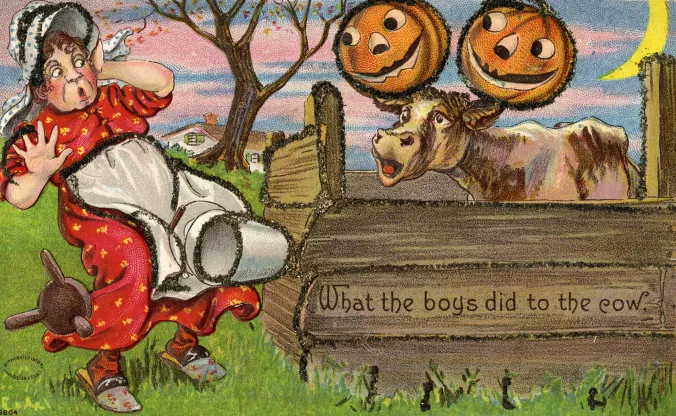
“What the boys did to the cow.” Postcard. Date unknown. Toronto Reference Library. Arts department. ARTS-PC-117. Public Domain.
Note from Andrea: When I found out that Stephanie is doing her dissertation on the history of witchcraft in early French Canada, I immediately started harassing asking her to do a special blog post about her work for Halloween. Because how super cool is that topic? And, kind person that she is, she has obliged. Enjoy!
By Stephanie Pettigrew
I spent the first few years of my life in Cheticamp, Nova Scotia. After moving with my parents to Sydney, I channeled my teenage resentment into learning as much as I could about my real home at the library. This is where I first heard the story of the Cheticamp witches, in an old collection of Cape Breton ghost stories. Around the turn of the twentieth century, two warring camps in the village, the Acadians and the Jerseys, would take turns casting spells upon each other. The Jerseymen had their witch, and the Acadians had their “counter-witch.” When the Jerseys were displeased with someone in the community, they would respond with witchcraft, and the battle would begin. For example, if a fisherman didn’t come in with the expected haul, he might come home to find the family cow had stopped milking. He would call the “good” Acadian witch to solve the problem, and “unbewitch” the cow. There was one particularly amusing story of the Acadian witch getting particularly frustrated and enchanting a number of buckets to chase after the suspected Jersey witch.[1]
I had never heard of any of this growing up, and my grandmother didn’t think it was important. Having grown up in a fishing family, I think my focus on the past worried her a bit. She wanted me to be a woman of the future, with an education and the ability to depend only on myself and nobody else. We did, however, live next door to the run-down Anglican church, which by my time was an extremely spooky place, and my dad has told me stories about using his shotgun to scare off Satanists. But since Satanists are not witches, I’ll move on.
Fast forward several years, and I came across a casual mention of the 1684 witchcraft trial of Jean Campagnard in Beaubassin, Acadie.
This week marks the 10th anniversary of Unwritten Histories, a project created by Andrea Eidinger that has shaped how many of us think about the past—how it’s written, shared, and understood.
In the coming weeks, the site will be taken offline. The material won’t be lost: Andrea is in the process of building a Pressbook to house the content, and the website itself has been archived.
To mark the occasion, we’ll be revisiting some of the most memorable posts from Unwritten Histories—the ones that challenged assumptions, opened up new conversations, and continue to resonate.
Spring is a very special time of year for me. For the most part, this has to do with lilacs, my favourite flowers. When I was a little girl, my elderly neighbour, Mr. Sullivan, had the most amazing lilac bush. He had planted several seedlings together when he first bought the house in the 1950s, so that by the 1980s, they had grown together into this massive tree. Every May, since this was Montreal, the tree would explode into bloom. This was my favourite time of the year, and one I looked forward to for months. The tree was next to my second-story bedroom window, so whenever my window was open, the scent of lilacs permeated my room. Mr. Sullivan would also bring over armfuls of lilac flowers for my family, and I always begged to be allowed to put a bouquet of them in my room. Over the years, lilacs have come to represent spring, joy, and wonder for me.
So, when I spotted a blooming lilac bush during a run the other day, I got to wondering about the history of lilacs, particularly in Canada. My husband was dubious; after all, who really cares about the history of a particular flower, even if it is really pretty? But, as I’ve discovered with my research, there is more to this flower than meets the eye.
231 Mutual St., Toronto, former site of Club Toronto and the Pussy Palace bathhouse events. Illustration by Ayo Tsalithaba. LGBTQ Oral History Digital Collaboratory (PI, Elspeth Brown), 2023.
When we began the Pussy Palace Oral History Project, we faced a familiar problem in queer oral history. Conventional interviews privilege chronology and plot. They ask what happened, who was there, what came next. In the case of the Pussy Palace, that gravitational pull led almost inevitably toward the 2000 police raid.
But, as we have hinted in earlier posts, the Palace was more than the raid. It was a bathhouse party: a humid, crowded, erotic world that unfolded across four floors of Club Toronto. And yet there are no public photographs of it, no ambient recordings, no architectural blueprints marked with memory.
This week marks the 10th anniversary of Unwritten Histories, a project created by Andrea Eidinger that has shaped how many of us think about the past—how it’s written, shared, and understood.
In the coming weeks, the site will be taken offline. The material won’t be lost: Andrea is in the process of building a Pressbook to house the content, and the website itself has been archived.
To mark the occasion, we’ll be revisiting some of the most memorable posts from Unwritten Histories—the ones that challenged assumptions, opened up new conversations, and continue to resonate.
Welcome! This blog will focus on the unwritten rules to history, as both a discipline, a field of study, and as a career. The information that appears in this blog is the result of thirteen years of doing history at the undergraduate and graduate level as well as six years working as a sessional instructor.
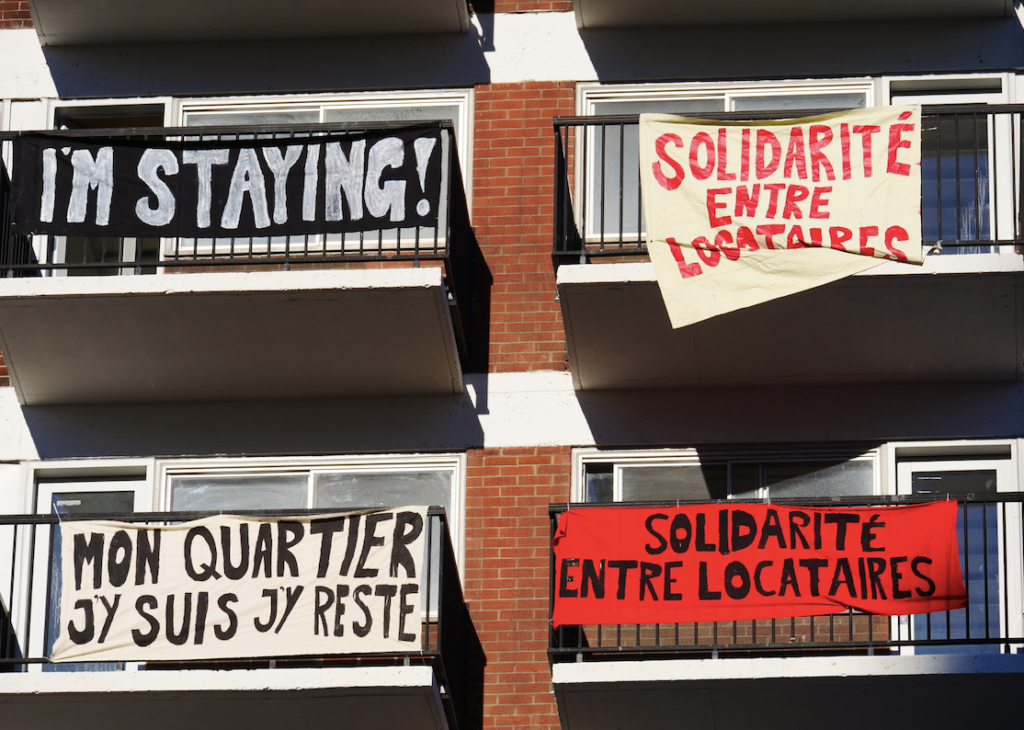
2022 Banner drop by tenants organised with le Syndicat des locataires autonomes de Montréal, Montreal Autonomous Tenants’ Union, (SLAM)1
This series looks at the different housing crises tenants have experienced across Canada from the 1900s until the present and details how they responded, successfully and unsuccessfully, through tactics of community and/or class-based direct action and structures based in grassroots direct democracy. We hope that by putting forward these examples, we can better inform the actions of activists in the present. Each blog post in this series centres on a single community and/or organisation, contextualises their existence within the conditions of their time, and recounts important moments or struggles, drawing lessons for or parallels to the present.
This post is part of the Tenants’ Collective Responses to Housing Crises across Canada series.
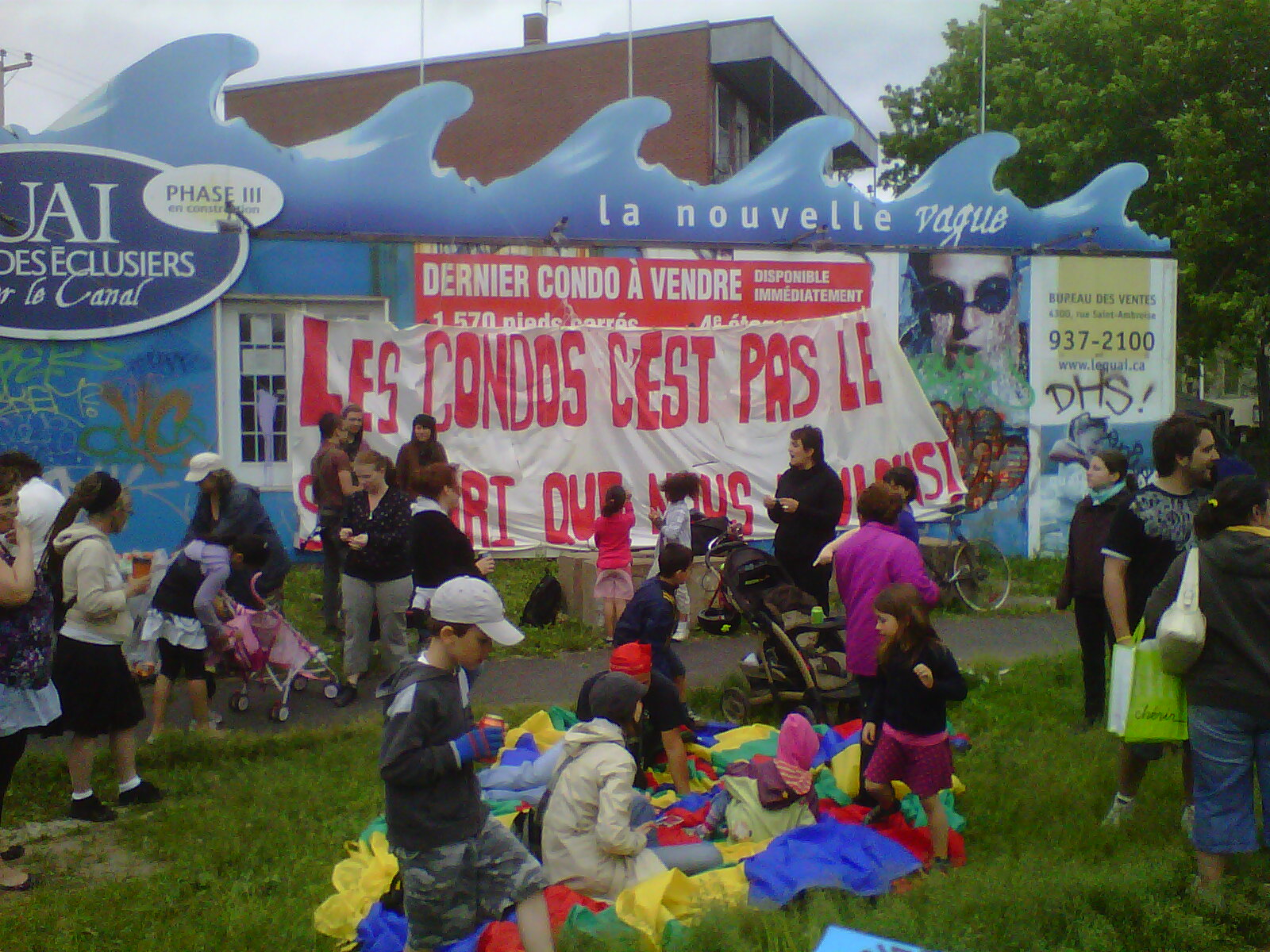
Anti-gentrification demonstration in Saint-Henri, Montreal, QC, 2011. Photo by Fred Burrill.
One of capitalism’s most powerful myths is that of supply and demand. Take housing, for instance. We’re told by policymakers that the current desperate situation facing tenants in major Canadian cities is due to increased immigration: in the words of outgoing Quebec Premier François Legault, “In Montreal, we have exceeded our welcoming capacity.”
In a majority-tenant city experiencing the financial crunch of skyrocketing rents, framing the issue this way has obvious repercussions for the well-being and safety of migrants and other people of colour in Montreal. It also conveniently hides the fact that housing costs are the manifestation of structural power relations and not naturally occurring phenomena. In other words, housing is a terrain of struggle between those who own property and those who are forced to pay for the privilege of a roof over their heads. In the zero-sum game of capitalist urban planning, the space for working-class life shrinks as the space for profit-making is enlarged.