To date what has become painfully clear is that the responsibility and burden of truth telling has fallen largely on Indigenous Peoples, communities, and Nations. Survivors have been forced to continue to fight the church and state in court to have their records released and their experiences validated. We only have to consider the infamous St. Anne’s Residential School, where Survivors are in a legal battle for their records. According to Veldon Coburn, the continued failure of Indigenous and Northern Affairs[3] to release these illustrates,
There is no difference between the suppression of the truth and denial of the truth. Both tactics – whether deployed to advance reconciliation or resist it – subordinate Indigenous Peoples and their truth of Residential Schools and the integral part this system of cultural genocide played in colonialism.
By Andrew Nurse On November 15, a media release announced that Pope Leo XIV, following an audience with members of the Canadian Roman Catholic hierarchy, “gifted sixty-two artefacts belonging to the ethnological collections of Vatican Museums.” This meant that the Vatican would begin a process of repatriating some aspects of Indigenous culture currently held in its museums to First Nations,… Read more »
Donald Wright When I learned that Jim Miller had died, I reached out to his partner, Lesley Biggs, to express my condolences. A few weeks later, she invited me to share a few words about him that would be read at his celebration of life. “It would be my honour,” I replied. And I meant it. Jim was something of… Read more »
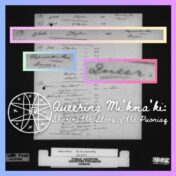
In the Mi’kmaw language, puoin (boo-oh-in) refers to a shaman or witch. In Mi’kmaki — the area we now call Atlantic Canada and parts of Maine and Québec—these puoinaq (plural of puoin) are sacred figures who possess the ability to shapeshift and to convoke the spirit world. Inspired by Mi’kmaw History Month, this installment of Queering Atlantic Canada troubles our understanding of region with Indigenous methodologies; it also offers a method to queering Indigenous history and culture through the Mi’kmaw language and storytelling alongside our own against-the-grain readings of the colonial record.
Julia Grummitt In the late eighteenth and nineteenth centuries, Métis communities emerged across a region of North America known as the historic North-West. These communities were formed by Indigenous descendants of the fur trade—the children of European fur traders and Indigenous women—who over generations of endogamy (intermarriage) developed a distinct identity as Métis with a shared culture, political consciousness, and… Read more »
This summer, the Government of Canada helped to promote visits to museums through the Canada Strong pass. While initially focused on seven of the country’s nine national museums, other provinces and territories also opted to offer reduced and free admission. Ultimately, 87 museums across the country were part of the initiative, and early data indicates that it helped to boost attendanc. While the removal of admission fees increases accessibility, and – in turn – public enjoyment and appreciation of museums, the reality is that museums across the country are suffering from a lack of resources. To be effective stewards of the cultural heritage that they care for, museums need adequate financial support.
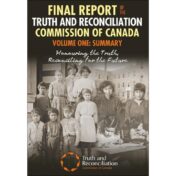
Ten years ago, the Truth and Reconciliation Commission (TRC) issued its final report on the history of residential schools in Canada. Mandated to “inform all Canadians about what happened in residential schools”, the “TRC documented the truth of Survivors, their families, communities and anyone personally affected by the residential school experience.” It found that residential schools were part of a… Read more »
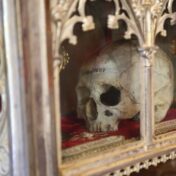
This case study of Jean de Brébeuf emphasizes the intricacies of colonial tensions and complicates colonial narratives and ideas of civilization hierarchies. Indigenous cannibalism was used as a means of ‘othering’ conducted by Catholic missionaries in the writings of the Jesuit Relations that recount the story of the cannibalization and martyrdom of Brébeuf and Lalement. The prescription of Brébeuf’s relics by a Catholic nun in 17th century Quebec complicates the simplicity of this process by contrasting it with the long standing European medical tradition of human consumption: corpse medicine.
Comments Off on Taking Care of the Truth: A Call for Collaborative, Community-Engaged Residential School Research
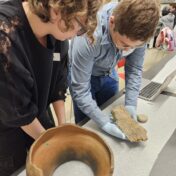
The Squamish Nation’s Yúusnewas project demonstrates the importance of data sovereignty, big data analysis, and the need for collaborative, community-engaged residential school research as part of the ongoing work of taking care of Survivors and everyone.
Jody Mason In her incisive discussion of Elon Musk’s recent gutting of the United States Agency for International Development (USAID), Jill Campbell-Miller correctly assesses the move as motivated by MAGA-movement isolationism. She further notes that Musk’s actions are complicated by the fact that, for many decades, the aid paradigm has also been subject to substantive critique from those who, unlike… Read more »