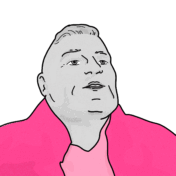
By Alisha Stranges and Elspeth H. Brown T’Hayla Ferguson, digital illustration by Ayo Tsalithaba for The Pussy Palace Oral History Project, LGBTQ Oral History Digital Collaboratory. 2025. “I think the intention was to make women’s sexuality and women’s play just normal. Not such a sideshow. We want to have a place to go and get naked and fuck and play,… Read more »
By Jenni Makahnouk This post is part of the Indian Act 150 series The Indian Act is commonly treated as a governance structure: an object to be interpreted, amended, or dismantled through policy reform. This framing assumes neutrality where there is appetite. This article argues that the Indian Act functions less as a static legal instrument and more as a… Read more »
By Don Wright The crisis consists precisely in the fact that the old is dying and the new cannot be born; in this interregnum a great variety of morbid symptoms appear. – Antonio Gramsci What will future historians – say in 2150 – call this historical moment? The 100-Year Terror, perhaps, a century marked by wars, migrations, and civil breakdowns,… Read more »
By Alisha Stranges and Elspeth H. Brown Ange Beever, digital illustration by Ayo Tsalithaba for The Pussy Palace Oral History Project, LGBTQ Oral History Digital Collaboratory. 2025. “When they first came in, I was pissed off that they had crashed the party. […] like these stupid men tromping through this place. I’m just like, ‘You look like idiots. You’re stupid…. Read more »
By Andrew Nurse and Roberta Lexier A crisis, Italian Marxist Antonio Gramsci wrote in response to the rise of fascism in the 1930s, occurs when: “The old order is dying and the new one is struggling to be born.” His point was that the crises societies experience have specific – if far from simple – historical causes. They also have… Read more »
By Bob Joseph This post is part of the Indian Act 150 series. This year, 2026, marks 150 years of the Consolidated Indian Act of 1876. This serves as a timely opportunity to discuss the dismantling of this destructive and restrictive piece of legislation. The Indian Act has constrained and controlled the lives of Status Indians for generations, and reconciliation… Read more »
By Katie Carson, Sarah Kittilsen, and Sean Carleton Canada 150—the sesquicentennial celebration of the country’s confederation—was marked with pomp and circumstance, as the Federal Government encouraged Canadians across the country to commemorate what it called “one of Canada’s proudest moments.” April 12, 2026 will mark another sesquicentennial: 150 years since the Canadian government passed the Indian Act, the cornerstone of the legislative apparatus that continues to govern… Read more »
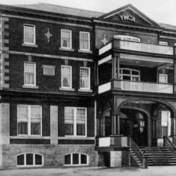
The kinds of assimilatory activities run by the YWCA, and other volunteer associations, were about providing material and ideological support for the Residential School and Indian Hospital system in Canada. The goal was to assimilate Indigenous patients and youth to European-Canadian life outside of Indian Hospitals and Residential Schools, including potential places of employment. We see this in a January 1964 report that reads “The girls from the Upgrading Class and the University girls somehow got into a chat session. It was wonderful to see the young ones who are just starting out gain encouragement and hope from just watching and talking with the ones who have obviously ‘made it’.”[12] The measure of Indigenous Peoples’ “making it” became assimilation through integration requiring the removal and disconnection of Indigenous Peoples from their culture, communities, and land. As in the Habkirk and Ferguson blog, our research implicates the everyday work of service organizations and their volunteers in supporting the colonial project. Where there were shortfalls of money or goods, we see women’s philanthropic work filling gaps. Knowing these histories and acknowledging these connections is integral to enacting Reconciliation because the “burden of truth-telling should not be placed on the shoulders of survivors. Reconciliation requires institutions, governments, and individuals to live up to their own responsibilities and complete and fulfill the TRC’s 94 calls to action. We must all learn the true history of Residential Schools, listen to Survivors and take a stand against those who would deny, distort and minimalize this history.”
As I reflect further on archives and western approaches to historical research, it is clear that institutions of colonial memory are consistently used against Indigenous Peoples as a weapon. This unjust weaponization comes from what is considered accurate information, who has access to its collection, management, and manipulation, and who has the right to challenge its validity. When it comes to representation of Indigenous Peoples in the archives, the responsibility of ‘the what’ and ‘the who’ has often rested solely within documentation obtained from colonial governments and their agents.
All Catholic and Protestant churches in Canada need to undertake this painful work of disentangling the spiritual call to service from the presence of imperialism, colonialism, racism, and white supremacy and hold themselves accountable for supporting the genocidal Residential School program. Although our team members are mapping a way forward to hold the members of this diocese accountable by providing answers to their questions on their journey towards reconciliation, this reflection work needs to be done by individual dioceses, churches, and settlers, as long as they remain open, willing to learn, and brave throughout our research investigations.

![Photo of a typed passage. It reads "Anecdotes by Ruth Fadum. G[redacted], Ward 5A, a little girl was in a body cast. She had T.B. of the spine. She was in a crib with a cover on to keep her in it. When Governor General, The Rt. Hon. Mr. Massey visited, she quietly looked at him, with her mischievous eyes, and he said, "I'll bet you're a holy terror when I'm not here." This was so true because she found all kinds of ways to lower the side of her crib and get out. [Redacted] was sent down from..." The remainder of the text is cut off.](https://activehistory.ca/wp-content/uploads/2025/11/Provincial-Archives-of-Alberta-PR-1991-0443-21-redacted-1-176x176.jpg)